











OpenText OpenStudio: The $1.5B Efficiency Vision with OT Trusts OT
Blog: OpenText Blogs

When it comes to digital transformation, OpenText believes in leading by example. In this OpenStudio interview from Nashville, we dive into the ambitious OT Trusts OT program, which has already delivered $160 million in operational savings by using OpenText's own products to simplify IT infrastructure, optimize cloud environments, and enhance cybersecurity—all without reducing headcount—while targeting $1.5 billion in efficiency gains over the next decade.
Watch the full interview:
Introduction
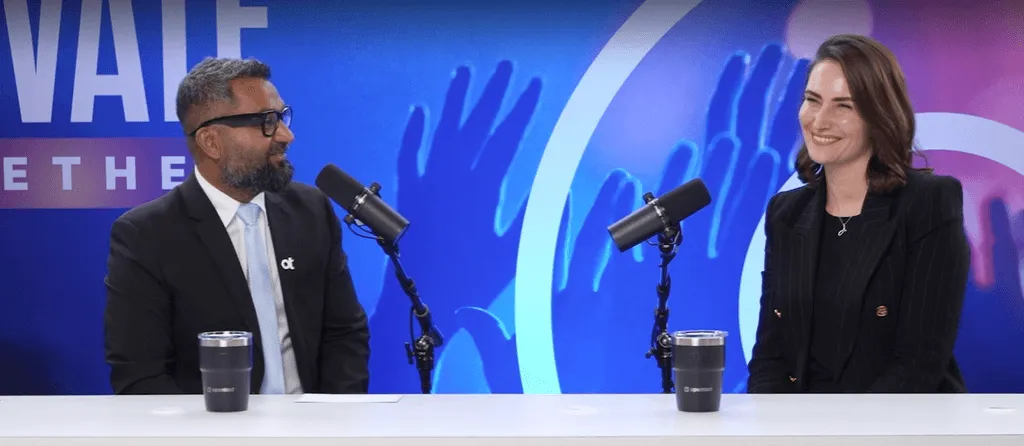
Ajit: Hello everyone, welcome to Open Studio. We are here in Nashville, OpenText World 2025, and as you can see, we're having a lot of good conversations. We are getting really exciting things. We're getting to know exciting things which are happening through this conference, and I have the privilege of having with me Michelle Kelly, VP Digital Strategy and Business Operations at OpenText. Michelle, welcome to Open Studio.
Michelle Kelly: Thanks for having me.
First Impressions of OpenText World
Ajit: I want to know a lot of things from Michelle, but first, how has been your first OpenText World so far?
Michelle: I think it's incredible just to bring together our employees, our customers, and our partners to take the time to talk about how we work together, how AI is changing the way we work, what are our problems we need to solve. You really can't replace that face to face time, and I think we're getting tremendous work done and just having a bit of fun along the way. Nashville is an awesome city to host this. It's been great.
Ajit: Absolutely. We have our last guest singing in open studio. So we're going to give you a chance as well.
Michelle: Oh, I draw the line there. But yes, we'll leave that talent to my colleagues.
Leading the OpenText Trusts OpenText Program
Ajit: Thank you so much. I also want to—I know you're leading the OpenText Trusts OpenText program. You want to talk about it? What's been—it's one of the biggest projects that we have undertaken, and you want to talk about that as well?
Michelle: I actually lead the team that tracks the results for it. So the delivery of it is done by amazing colleagues of mine. My team really looks at, are we hitting our KPIs? Are we hitting our savings? And we set a really ambitious goal. So a billion dollars in savings over 10 years. And for us, achievable. We knew we could do it, and I had shared earlier today that by 8 months we had delivered 87 million, so we knew we were onto something. Fast forward to today, we're at $160 million in savings, and so Shannon Bell, our chief digital officer, just announced we've increased that to 1.5 billion. She said, I was lucky it's not 2 billion. But we really feel it's achievable, and we've done it really by focusing on operational efficiency, not by cutting headcount. It lasts, it's harder to do, but that kind of result lasts, and we've been looking at sort of a five-point plan. So how do we simplify our hardware and our applications, how do we look at the vendors that we do business with and trim that down and really consolidate our contracts so that we're getting more value and we have better partnership ecosystem there? How do we optimize our cloud environments, close the data centers we don't need, keep the ones that we do need, get ready for cybersecurity? AI brings so much innovation, but it also brings risks, so putting a plan in to get 100% managed security across the enterprise. The team is rallied behind this because they're seeing the results.
Customer Response and Change Management
Ajit: That's awesome. I'm sure you're sharing these with our customers as well. What's been some of the response that you've seen when Shannon and yourself shared with our customers?
Michelle: It's a good question. You would think they'd want to actually talk to us about more technical and the delivery piece. The products really speak for themselves because the delivery of that one, now 1.5 billion, has really been about using our products and services. They actually want to talk about how we got the employees on board, which has nothing to do with the technology, and it's about driving that change management. For us, we're really consistent in how we measure our results. We celebrate our wins and losses with employees. We really took this championship mindset. So we set high goals, high expectations, but high accountability on the team. And so our conversations with customers, yes, are about our amazing software and services, but we really work with them on like, how did you make it stick? And it's getting really down to just really consistent and engaging employee communication, and that's been the secret sauce of this program.
Unique Market Position
Ajit: Do you think any other competition in the market is doing this, or do you think we're the only ones, or you're facing similar challenges in the market?
Michelle: What I think is unique about this program is it was designed by really starting with a simple question with our CIO Shannon Bell, and it was what keeps you up at night. While she supports our commercial customers, she also supports our 22,000 employees. Her concerns are the exact same as our customers. For us, we know that we are bringing a solution to market that helps the everyday CIO. Those are the things that keep them up at night—cybersecurity, costs, vendor landscape, hyperscaler environment. Are we optimizing the cloud? For us, I'm feeling like we've really designed that program by sitting down and asking those tough questions, making sure we're addressing them head on. So I think we've got a pretty unique solution in the market that way.
Leveraging OpenText Products
Ajit: That's awesome. I think, and I'm sure as you heard from the customers, many are going to leverage that to their success. I also want to talk about what are some of the products that you're using, OpenText products that you're leveraging as part of this program?
Michelle: You would have seen my colleague Karen today on stage. OpenText™ Service Management has been an awesome platform for us. So we rolled it out last year at OpenText World, and today we're at 500 teams using it around across OpenText, and it is a one-stop shop for service, and it's made it easier for our employees. But it's actually made it easier for our IT team because they have one platform and one window where they can go in and service whether it's an HR, a technical request, and so for us that platform has been really transformative for our organization in terms of our ability to deliver savings but be more efficient. We also saw Lise, my colleague Lise, we're opening our global command center, and we look at that, looking at how we can deploy AI agents to better operationalize when we have issues in our network or issues with our software, and so our ability to recover faster during operations, looking across our ITOM portfolio, it's just, it's really delivered value, but it's made our teams more efficient through the software.
Vision for 2030
Ajit: That's awesome. And here's my fun question for you. Imagine it's 2030 and we are here again in an OpenText World. We don't know where it's going to happen, but how different is it going to be? Is that something you would predict? Are we going to be still having humans or robots running around here?
Michelle: It's interesting. So we talk a lot about our workforce and then the AI agents that support that workforce, and we actually have job descriptions for our agents. Those job descriptions are complementary to our human workers. Maybe in that time, in 2030, I think you said it was, we will have agents with us. We'll be registering ourselves and our agents that are just going to make it that much more effective. But I don't think you can take away the human interaction. I think that's sort of the power of OpenText World—our ability to have human interaction, break bread, have conversations in real time. So I think we'll still be doing that. We just might have some really intelligent note takers with us.
Closing Thoughts
Ajit: Awesome. Thank you for sharing. Any final thoughts to our listeners and audience on the overall, your experience? What are things coming for FY26? How would you like to put it that way?
Michelle: I think the best solutions come out of us just having conversation and not really talking about the technology, but talking about what our problems are. When we talk to our customers and our partners, both internally and externally, what do you need to solve? Just starting with those super simple questions, that's where the power of the technology comes through, because we look at the process and we look at what we need to solve, and then together we're solving it. That conversation is really powerful, and so I want to see more of that.
Ajit: That's awesome. Thank you so much, Michelle for talking and sharing, thanking, sharing all of this and thank you all for tuning in, and we'll continue this conversation and look forward to having you. Thank you so much.
About OpenStudio
OpenStudio is OpenText’s media hub for thought leadership and innovation. This series explores stories of progress and success from industry experts, visionaries, and trailblazers. Our goal is to inspire, inform, and connect audiences with the people and ideas shaping the future of the digital world.
The post OpenText OpenStudio: The $1.5B Efficiency Vision with OT Trusts OT appeared first on OpenText Blogs.