











OpenText OpenStudio: Prompt Engineering & Enterprise AI for Production
Blog: OpenText Blogs

As enterprises move from AI experimentation to production, the questions are shifting from "Can we use AI?" to "How do we use it responsibly and effectively?" In this OpenStudio conversation from OpenText World 2025, we explore how OpenText Professional Services helps customers navigate model selection, prompt engineering, and data preparation using Aviator Studio and the AI Data Platform to deliver real business value.
Watch the full interview:
Introduction
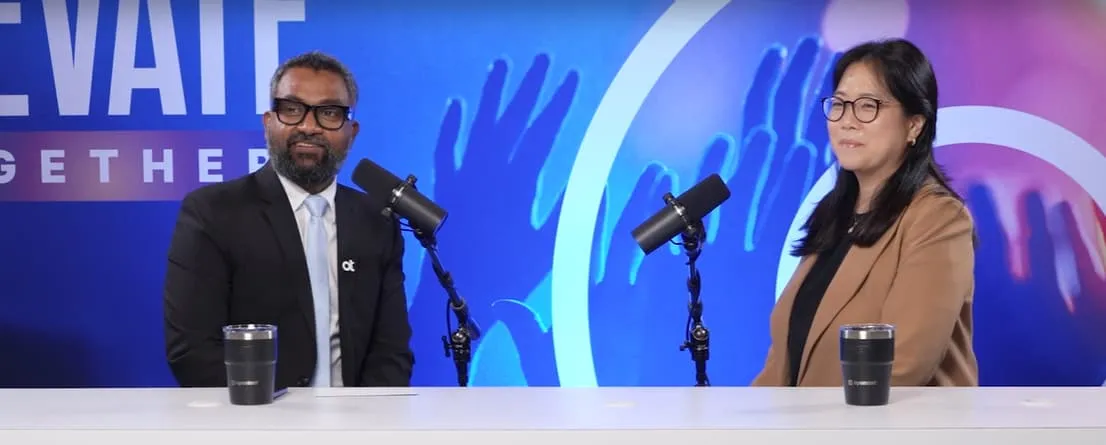
Ajit: Hello everyone. My name is Ajit Yohannan. Welcome once again to Open Studio as the conversation gets interesting. I'm getting more of my guests talking about technology, their experience with technology, their experience with helping customers, so I'm delighted to have with me Sheila Woo, Senior Director of AI and analytics. She is part of our team and she's been a wonderful advocate of our cloud services, and now she's in the professional services and I want to have this conversation to understand what are the new things you're doing. So welcome to the show, Sheila.
Sheila: Thanks for having me, Ajit.
OpenText World 2025: Evolution of AI Conversations
Ajit: Let's start with how was OpenText World 2025 for you this year?
Sheila: It's been great. I love it. A lot of excitement, a lot of people walking around just hearing stories from our customers, and I think it's really impactful to them. I'm hearing a lot of conversations around new ideas that are coming up, especially around agentic frameworks and things like that. So it's really nice to see. I think if we look back last year when I was here and I was participating in some of the demos, our customers were starting to explore and test out the AI and this year I feel like it's a lot more questions around how can I utilize AI in a responsible way? How can I do more with it now that I've got the foundations right, what other actions can I take? What does responsible agency mean in an agentic framework? So it's really nice to see these conversations evolve and kind of spark all of these ideas.
Leading AI and Analytics in Professional Services
Ajit: Can you also tell what's your current role so that we—I should have started there. I'm sorry.
Sheila: I'm in professional services. I'm the senior director of AI and analytics. What we do, my team primarily is we work with data. OpenText delivers and builds this awesome technology of the software around content and data. What we do is we help our customers bridge that gap as they implement and take on the software that OpenText provides. My team, what they do is we sit down with our customers to understand what are the data problems that exist and what is the best way to see that surfaced through the technology that they're adopting. A lot of that means talking about the use cases, maybe manipulating or cleansing or normalizing the data and preparing it in such a way that it'll flow through the system in a way that benefits them for their specific uses.
Implementing Innovation: Aviator Studio and Model Services
Ajit: Any specific examples from this year, the innovation that you see you and your team is going to implement for customers?
Sheila: A lot of the exciting announcements that were made yesterday and today around Aviator Studio, aviator model services. So my team, because they're made up of data scientists, computational linguists, data analysts, ML engineers or LLM consultants, they're really, really focused on the data and the evaluation of those models. Through these new technologies and innovations that are coming out we're going to really help our customers. It's kind of the same thing but in a little more advanced way. We're going to help them to make these decisions around what LLM, which model is best, how can we use the model in the best way. It's not just about the model selection but how it's integrated, how are we going to prompt engineer, what prompt templates am I going to use, things like that. So it's really about adapting their data to the new technologies. These innovations that we saw yesterday, specifically aviator studio, aviator model services, I think those are the ones that we're really excited about. And of course, all that wrapped in the OpenText AI data platform.
Customer Response and Readiness
Ajit: I'm sure you're talking to customers as well. So what is their response to all of these? What are you hearing from?
Sheila: I just got excited. I think that they're really excited and ready for it because we're already doing some of this stuff either in POCs or in an unlabeled way in that it's not product and maybe it's not called the product Aviator, Aviator Studio, but we are already doing things like model orchestration, using LLM as a judge and some of those concepts that Muhi shared yesterday. I think they're ready for it, especially those that have matured or advanced in their AI journey. It's not to say that we will neglect those that are earlier on in the AI journey, but we can see that our customers who are advancing are ready for this.
Bridging Old and New AI Technologies
Ajit: Any examples of exciting things that you're doing? I remember doing this demo last year. What I'm seeing this year is a huge shift, right? So how do you see that? Any exciting things that you're working on?
Sheila: I mean, I can't share too much, but I could say the model orchestration is one of the things and LLM as a judge is another thing. What I'm seeing—my background personally is in natural language processing and text mining and so I love seeing old AI and the new AI come together in a workflow that makes sense for a business impact and a true real world outcome and what that really means is not just throw data at the system and expect a magical answer. It's, I need an answer that makes sense for the specific task that I'm about to do and it needs to save me some money or save me some time. I can't share some details, but it's really nice to see all of these innovations coming together.
Understanding Agentic AI
Ajit: So exciting things about agentic AI and the army of—that looks pretty sci-fi.
Sheila: It maybe sounds sci-fi, but I think an easier way to think about it is giving agency to systems and data so that you are not just getting an insight, but something is happening with that insight. It's a very natural next step. I think I really love one of the—Yemi from Google Cloud, he shared on the keynotes today that it's really about the way that a human thinks. The human will think, they'll have an intention, they'll think about it, they're going to have a moment of reflection and reasoning, and then they're going to act, they're going to do something about it. They'll maybe speak or take an action or do something. That's the same thing reflected in this agency. I mean, it might sound sci-fi, but it's not really. I think if you just, if you called it a workflow, you wouldn't think it's sci-fi.
OpenText's Competitive Position
Ajit: I'm sure you're also scanning what's the landscape. Do you see any other software enterprise companies innovating at the speed at which OpenText is doing? What's been your take on that?
Sheila: I mean, there definitely are. OpenText is not the only company that's innovating, but I love seeing in this era of AI a lot of collaboration and a lot of partnership. That's why when yesterday it was announced that the AI data platform was going to be open—secure trusted data but open—that really means that our AI can speak to another platform's AI and that really means that even if they're advancing quickly, that's fine. We are advancing just as quickly but for the purpose of the use cases that our customers have. I think it's really nice and one differentiator I feel personally at OpenText is we are really driven by the stories that our customers, the people that we serve, that they have and their needs. That's really integrated into the fabric of how we design our technology. So it's really nice.
OpenText Using Its Own Technology
Ajit: You also seen how OpenText is using some of its own product and you saw some great demos. Anything that stood out for you, which you think?
Sheila: I mean, I didn't realize how impactful—sometimes you don't realize that you're using the AI, the tools that were already OpenText. That transition has been really smooth and swift, I'd say. I think it's really nice to see. I think yesterday in the series of demos, it was Muhi that said, every day you don't realize that you're actually using an OpenText technology. Even myself, I don't realize when I go grab a cup of coffee that there's perhaps an OpenText system behind that. So that's been really nice.
Message to OpenText Customers
Ajit: That's awesome. Thank you so much for speaking. Any thoughts to our customers out there you want to leave behind?
Sheila: It's only going to be positive. One thing I think that's really—I don't know if it's this year, but it's probably every year at every OpenText World—I really don't take light the trust that our customers put in us. Because I'm in professional services, we get to see a lot of projects, we get to see a lot of customers, and I myself have a few customers here today that are either going to speak about our technology, our projects or whatnot, but it's really, really nice to see them attest to their own experiences and not just in a way that's like, okay, I'm here for a marketing gig or whatever. They really mean it and so it's really nice to see them put their trust in us and it kind of really reflects why their data can be trusted with our systems as well.
Vision for 2030
Ajit: Maybe one last fun question. You've seen last year's OpenText and this year, how different is going to be 2030 OpenText?
Sheila: You know what, I went for dinner with a customer yesterday, and she said next year, let's have it in a tropical place and let's have the start time be like 2 p.m. or late afternoon or something like that. So maybe that—I heard that it was in Orlando next year. So at least it'll be warm. I think that in terms of the content, it's going to be exciting to see, especially with the AI data platform and Aviator Studio putting more agency and agents at the hands of end users, not necessarily a developer and not necessarily a tech person. We're going to see a little bit more of that taken—people are taking advantage of that. So I think that we'll see more of those stories where it's small snippets of people saying, this is how I used it, this is how it changed my life, and I'm really excited to see that.
Closing
Ajit: Awesome. Thanks, Sheila, for sharing those views. I'm sure all of us are excited about the future and also about what we can do for customers. Thank you all for sharing your excitement as well.
Sheila: Thanks for having me.
Ajit: Thank you all for tuning in and we look forward to catching up again soon. Thank you.
About OpenStudio
OpenStudio is OpenText’s media hub for thought leadership and innovation. This series explores stories of progress and success from industry experts, visionaries, and trailblazers. Our goal is to inspire, inform, and connect audiences with the people and ideas shaping the future of the digital world.
The post OpenText OpenStudio: Prompt Engineering & Enterprise AI for Production appeared first on OpenText Blogs.