











Economic Sustainability For Success: What It Is And How To Implement It
Blog: Blog | Process Street | Compliance Operations Platform
Economic sustainability is the ability to create lasting prosperity without weakening the environmental and social systems that prosperity depends on. For a business, that means more than keeping revenue growing. It means using resources responsibly, managing long-term risks, and creating value without shifting hidden costs to workers, communities, or the planet.
This guide explains how economic, social, and environmental sustainability fit together, why GDP alone cannot measure sustainable progress, and how organizations can turn sustainability goals into repeatable day-to-day practices.
Economic sustainability connects global systems with practical choices. The sections below move from definition and measurement to energy, water, food, investment, local benefits, and accountable business operations.
What is economic sustainability?
Economic sustainability is the ability to support lasting prosperity without depleting the environmental and social foundations that economic activity depends on. It asks whether production, consumption, investment, and public policy can continue to create value over time, not merely whether output rises this quarter.
Economic sustainability depends on nested systems
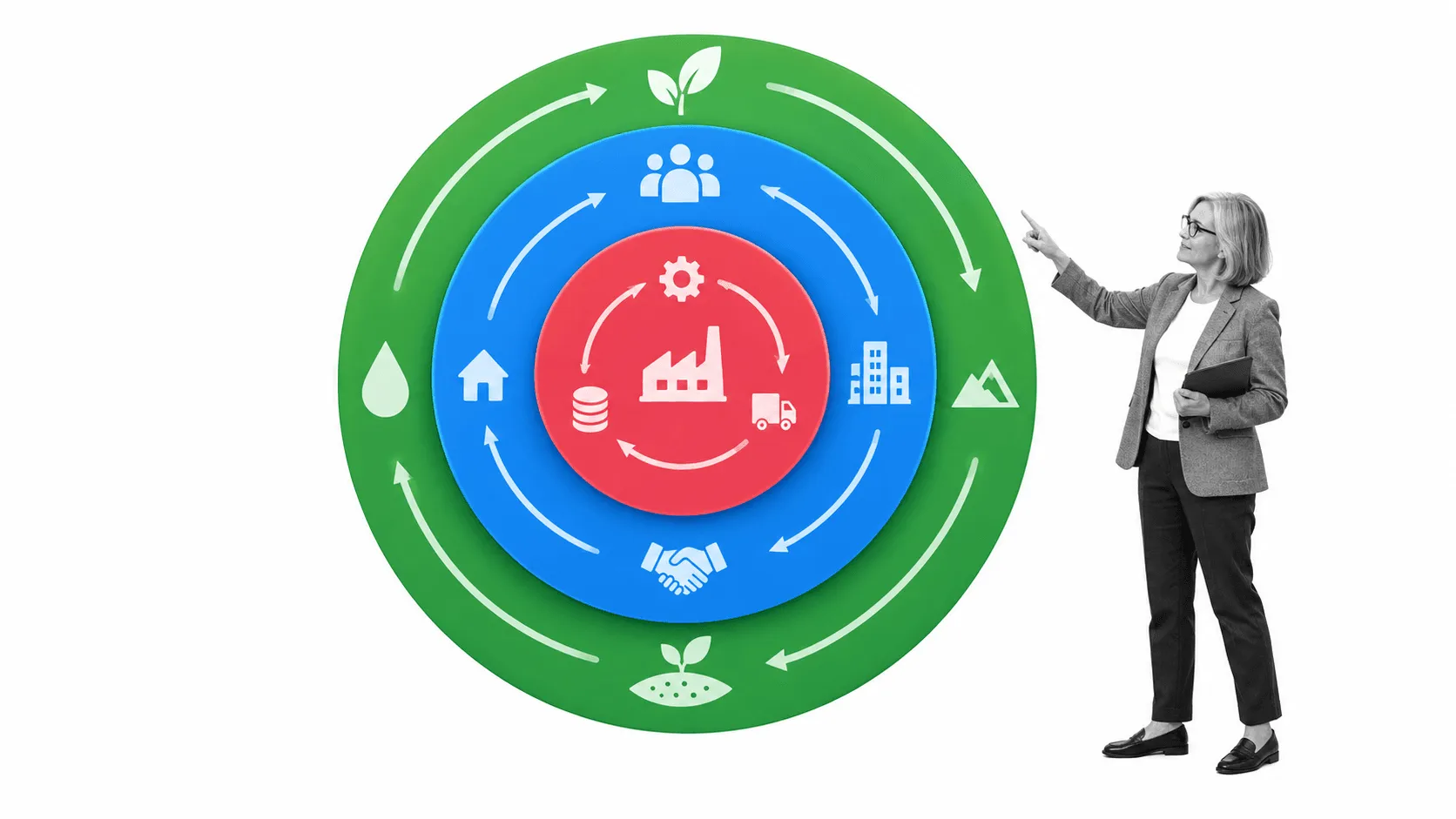
The economy does not sit beside society and the environment as an equal, separate pillar. Markets operate inside societies, and societies operate inside the biosphere. Businesses depend on healthy workers, stable communities, water, energy, materials, infrastructure, and functioning ecosystems. When those foundations weaken, costs and risks eventually return to the economy.
At a business level, economic sustainability means remaining viable while using resources responsibly, treating people fairly, and managing long-term risks. A profitable company can still be economically unsustainable if its model relies on exhausted inputs, unsafe labor, hidden pollution, or public costs that others must absorb.
How to measure economic sustainability
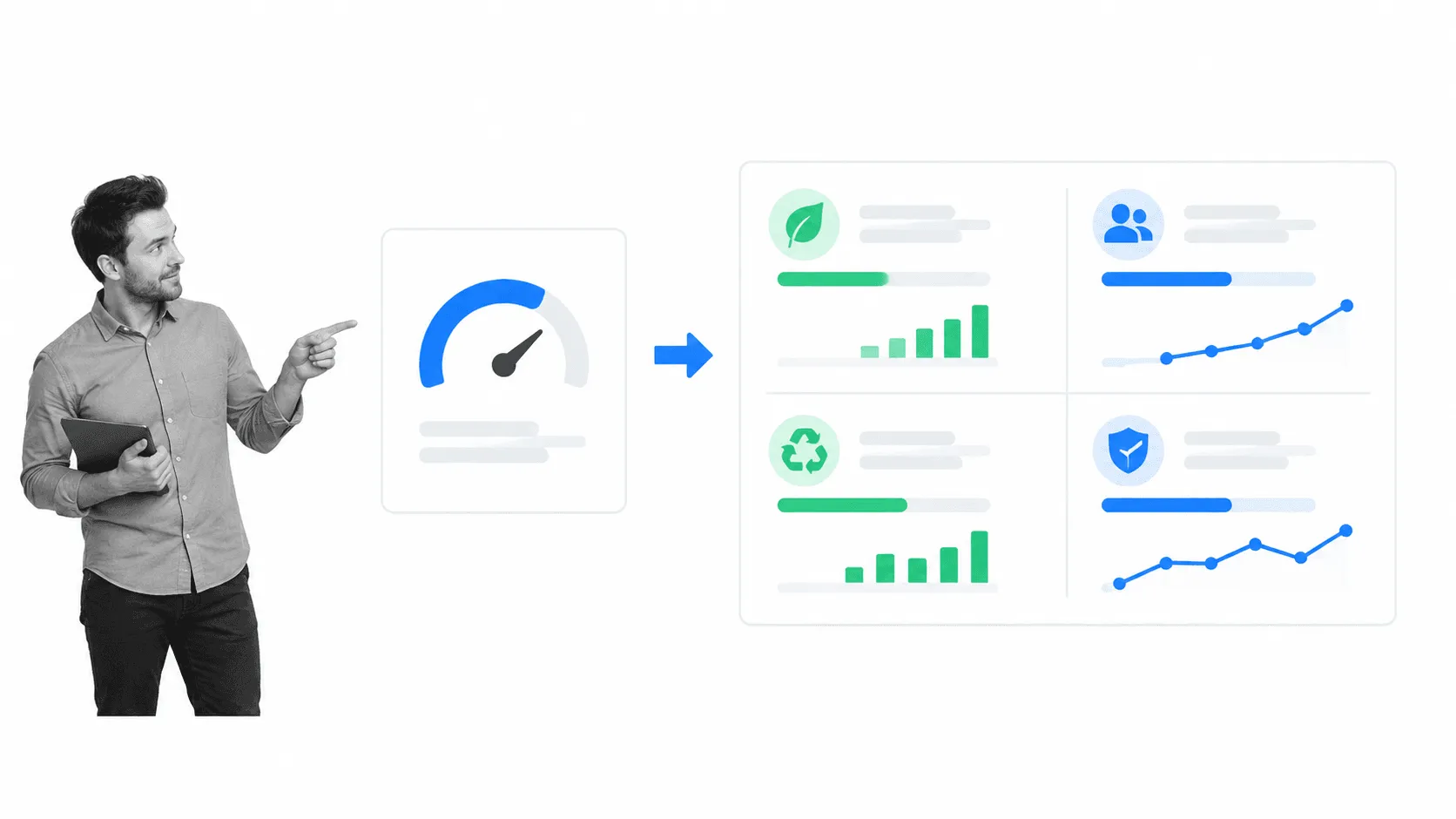
Gross domestic product is useful for measuring market output, but GDP alone cannot show whether prosperity is durable or broadly shared. It can rise after a disaster, while unpaid care, ecosystem loss, household insecurity, and resource depletion remain invisible. A better scorecard combines economic output with household wellbeing, resource productivity, resilience, and distribution.
Useful measures include energy and material intensity, living standards, access to essential services, employment quality, natural-capital pressures, supply continuity, and the ability to withstand shocks. The right mix depends on the decision. The important point is to state the system boundary, the time horizon, and who bears the costs and benefits.
From economic production to sustainable wellbeing
A traditional definition focuses on the ability of an economy to support a defined level of economic production indefinitely. A broader definition refers to practices that support long-term economic growth without negatively impacting social, environmental, and cultural aspects of the community. These conceptions are interlinked and should be considered together to gain a more holistic understanding.
The environment, society, and the economy interact at every level, from the global economy down to the small scale of a local business. The nested-dependencies model makes that interaction visible. You cannot achieve economic sustainability without a sustained healthy environment and society, because each business relies directly and indirectly on people, communities, natural resources, and public infrastructure.
A defined level of economic production and long-term economic growth are commonly measured through a nation’s gross domestic product. GDP is the total amount of market production, goods and services, within a period. The top economic goal for many nations is continued GDP growth, so stagnant and falling GDP are often treated as outcomes to avoid.
That framing is incomplete. National GDP does not tell us how much the average person earns, how income is distributed, whether essential needs are met, or whether production reduces the ability of future generations to meet their needs. Economic performance today must be interpreted alongside the conditions that make economic performance possible tomorrow.
GDP per person can add context, but an average still conceals the lower end of the income distribution. A poverty threshold describes the minimum income considered necessary for an adequate standard of living, while the threshold itself differs by country and method. Below it, people may lack food, shelter, healthcare, education, safe water, or other foundations of a good quality of life.
Economic sustainability therefore cannot mean growth for its own sake. Growth must be inclusive of practices that reduce deprivation and protect social, environmental, and cultural systems. A useful interpretation asks whether prosperity meets present needs, expands real opportunity, and leaves future generations with the capacity to meet their own needs.
This broader view changes decisions. It asks a business to look beyond green notes at the end of a quarter and examine the health of the people within and outside its community, the resilience of suppliers, and the condition of the planet. Those factors influence whether operations can remain buoyant and strong in the face of change.
The resulting scorecard is not one universal index. It is a set of connected measures chosen for a real decision. Economic indicators show production and income. Social indicators show whether benefits reach people and whether minimum standards of living are met. Environmental indicators show whether resource use and ecological pressures remain within conditions that can support future activity.
Considering both conceptions of economic sustainability helps reveal how local and global scales are linked. If a business is considering its sustained economic health, it should look around at the people within and outside its community and at the health of the planet. These are factors that influence how much value the business can create at the end of each quarter.
The interaction between the environment, society, and the economy occurs at all levels. A local convenience store depends on transport, energy, water, customers, workers, public services, and wider supply chains. A large multinational depends on the same foundations at a different scale. A disruption in one part of the nested-dependencies model can travel through the others.
Looking only at long-term economic growth may therefore give an inaccurate view of what economic sustainability means. Continual, never-ending growth in total production says nothing about the condition of the inputs, the distribution of the output, or the social and environmental elements affected. Sustainability means considering whether those relationships can endure.
A nation may report a strong average GDP per person while many people remain below a minimum standard of living. A business may report growing revenue while increasing long-term liabilities through wasted energy, water, materials, or employee turnover. In both cases, the headline figure is real, but it does not give a complete picture.
A broader goal is to optimize quality of life for people living today and their descendants. That requires meeting present needs without compromising the ability of future generations to meet their needs. It also requires attention to different starting points, because developing and developed countries do not have the same infrastructure, income distribution, or resource demands.
For decision-makers, the practical lesson is to connect economic targets with social and environmental evidence. Measure the benefit, identify who receives it, record the resource demand, and test how the result changes over time. This creates a working definition that can guide choices rather than a slogan that changes whenever inconvenient evidence appears.
The first definition of economic sustainability can be applied on a larger scale, while the second brings environmental and social factors into the mix for sustained economic production. Despite the slight differences between the two definitions, they are linked on both a local and global scale. Considering them together gives a more holistic understanding.
The problem with considering national GDP by itself is that national GDP does not tell us how much the average person’s income is. We have no idea how many people are at the lower end of the income distribution, or whether the increase in production improves the minimum standard of living.
Considering the nested dependencies model, growth should be reflected across a broader part of society and across broader geographies in order to be sustainable in a social sense as much as an environmental one. GDP per person reflects both the growth goals of nations and a broader impact, but it is still only one part of the picture.
The next question is whether GDP growth per person supports the goal of understanding economic sustainability. This depends on what the goal of sustainability is. If sustainability focuses on meeting the needs of the present without compromising the ability of future generations to meet their needs, the measure must address quality of life as well as output.
Contemplate the poverty threshold, the minimum income deemed necessary to achieve an adequate standard of living in a given country. In developing countries and developed countries, the threshold is calculated differently, but below it people’s needs may not be met. Taking this into consideration changes how economic success should be assessed.
Achieving economic sustainability also requires day-to-day actions aligned with policy. Environmental accounting can reveal where a business is wasting time, effort, money, energy, and water. Cost savings from improved efficiency can reduce long-term liabilities, while a healthier workplace can reduce employee turnover. These operational benefits support achieving long-term economic health.
Above all, the aim is an accurate view of cause and effect. Root causes may sit upstream from the visible problem, and improvements may not be achieved until incentives, infrastructure, and responsibilities change. A business that has acquired better data can target investment, research and development spending, and corrective action where they will create durable value. Across cities, leaders can adapt an actionable alternative after evidence is collected and acted upon.
The limits of economic sustainability
Economic sustainability is difficult, but it is not a contradiction. The challenge is that unlimited material throughput cannot continue on a finite planet. Durable prosperity therefore depends on producing more value with fewer virgin resources, protecting essential systems, and improving human wellbeing without assuming that every form of consumption must grow forever.
The scale of unmet need also matters. The World Bank now uses $3.00 per person per day in 2021 purchasing-power-parity terms as its international extreme-poverty line and estimated that about 838 million people lived below it in 2022. Economic sustainability must create room for better living standards while reducing wasteful and damaging resource use.
That requires tradeoffs, innovation, and institutions that reward long-term value. It also requires honest measurement. Efficiency gains can be canceled by higher total consumption, and a local environmental improvement can shift harm into another region or supply chain. Sustainability is credible when these effects are measured and governed rather than hidden.
The ecological footprint helps explain the constraint. It measures human demand in terms of the biologically productive land and water needed to provide resources and absorb waste. If everyone consumed resources at the same rate as a high-income economy, the required productive area would exceed what one planet can regenerate. That does not mean developing countries must remain poor. It means development and resource use must be redesigned together.
Average GDP per person can rise while a percentage of people remain below minimum living standards. It can also rise while natural capital is depleted. A complete picture therefore considers the quality of human life, the distribution of income, access to essential services, environmental limits, and the prospects of future generations. These interacting factors influence the economy and determine whether success can be sustained.
Population, consumption, and technology all matter. Overpopulation is not a sufficient explanation because resource use per person differs enormously. Technology can improve efficiency, but rebound effects may increase total demand. Policy can correct incentives, yet poorly designed policy can move a problem from one sector or geography to another. Root causes need to be examined before a visible symptom is treated as the whole problem.
Economic sustainability is therefore achievable only through coordinated change. Individuals can reduce waste and support responsible products. Businesses can redesign operations, supply chains, products, and investment decisions. Policymakers can protect common resources, price harmful externalities, fund public infrastructure, and ensure that transition costs do not fall on people least able to bear them.
The question is not whether every economy can copy the historic material path of developed countries. The question is how every person can meet essential needs and improve quality of life within environmental boundaries. That is a demanding goal, but treating social and environmental conditions as part of the economy gives leaders a more accurate view of the work required.
Solving the economic sustainability problem
There is no single technical fix. Energy, water, food, land, health, and livelihoods are connected, so interventions should be tested for lifecycle impacts, distributional effects, and unintended consequences.
Energy systems
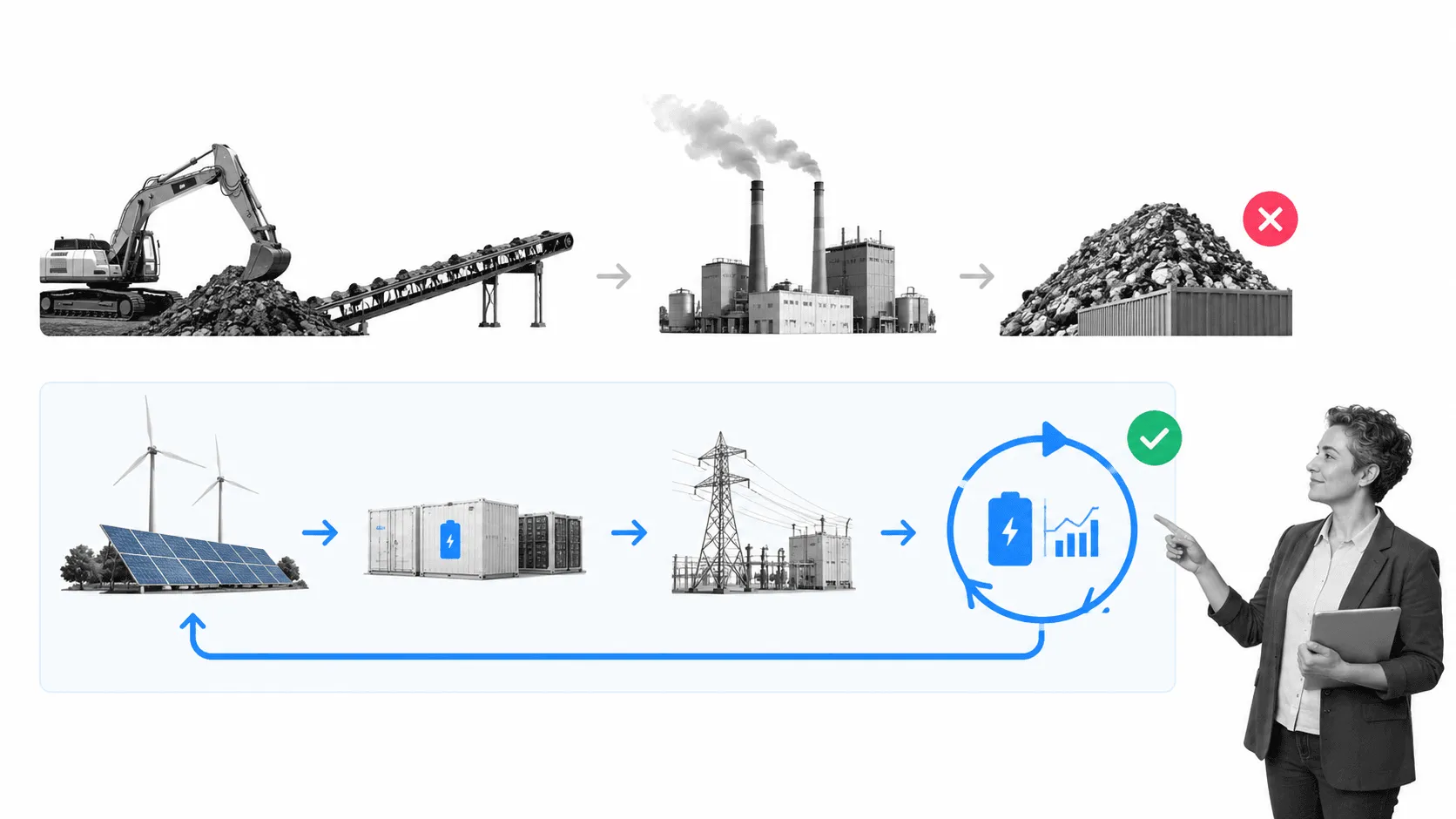
Energy systems must provide reliable access while cutting pollution and dependence on finite fuels. The International Energy Agency projected roughly $2.2 trillion of clean-energy investment in 2025, about twice expected investment in fossil fuels. Capital alone is not enough. Grids, storage, demand management, permitting, workforce skills, and community impacts determine whether projects deliver durable value.
Innovation can change the system boundary. Caltech researchers demonstrated wireless power transmission from space in 2023, an early proof of concept rather than a commercial solution. The example is useful because it shows how research can open new options while evidence, cost, safety, and deployment constraints still require careful review.
Water stewardship
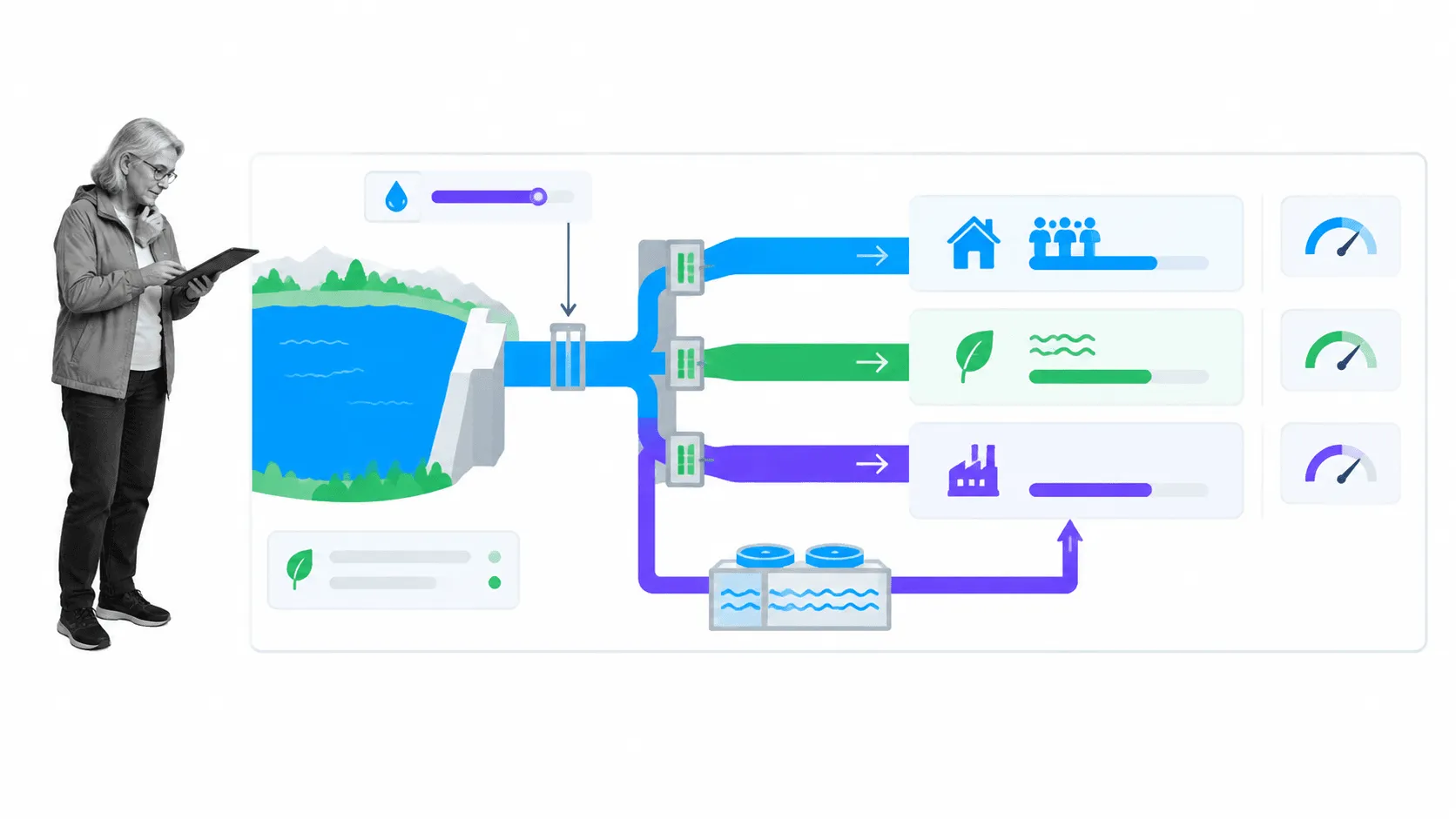
Water security connects public health, ecosystems, agriculture, industry, and urban growth. WHO and UNICEF reported that 2.1 billion people still lacked safely managed drinking water in 2024. Cities and businesses can reduce pressure through leak detection, efficient equipment, reuse, watershed protection, and allocation rules that preserve essential household and ecological needs.
Food systems
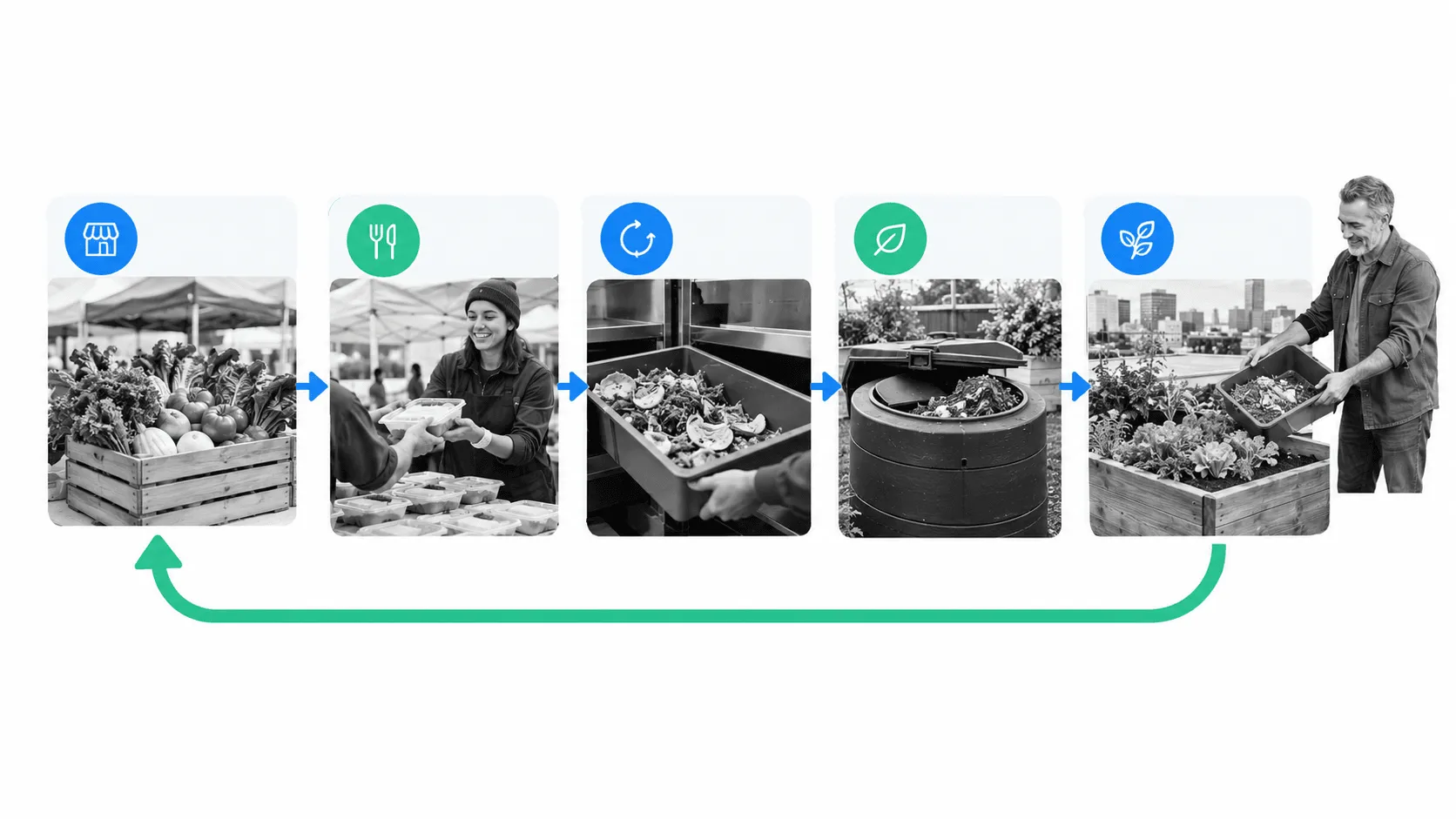
Food systems must improve access while reducing loss, waste, emissions, and damage to soil and water. FAO estimated that about 673 million people experienced hunger in 2024. UNEP estimated 1.05 billion tonnes of food were wasted in 2022, equal to about 19% of food available to consumers.
Local procurement, redistribution, cold-chain improvements, composting, regenerative practices, and urban growing can reinforce one another when designed as a cycle. The goal is not simply to produce more. It is to deliver nutritious food reliably while recovering value from unavoidable by-products and protecting the systems that future production needs.
Business value from economic sustainability
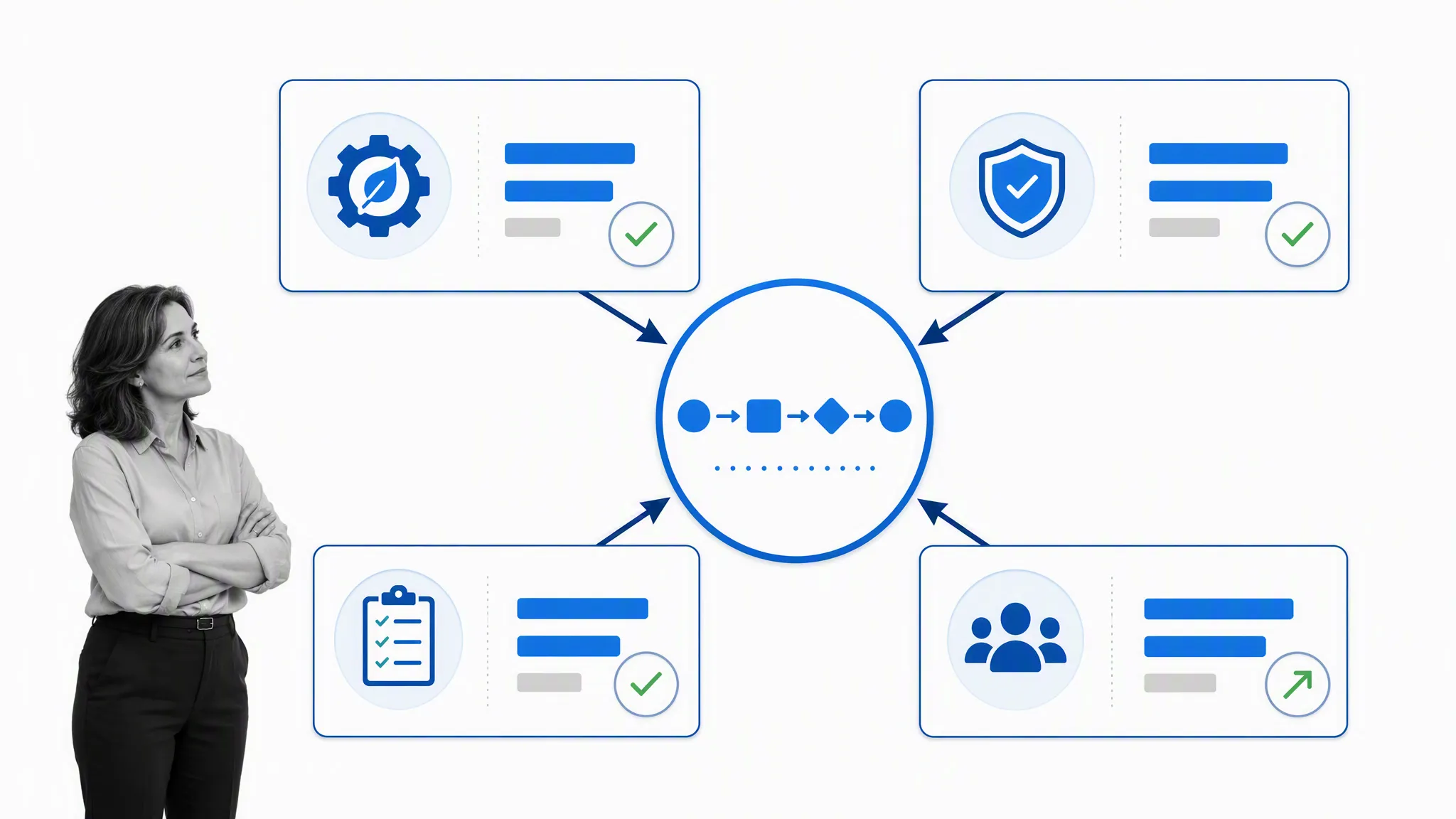
- Being a sustainable business can help you when bidding for contracts from governmental or corporate bodies who work with sustainability.
- Focusing on sustainability allows you to scrutinize your overall business functions , specifically, where you are wasting time, effort, and money. For example, by incorporating environmental accounting procedures, you can reduce your energy costs.
- By improving your workplace environment, you will reduce employee turnover, save money, and benefit from increased productivity, engagement, and innovation. No one wants to work for the baddies.
- Publicly championing your environmental efforts can improve branding and gain you more loyal and satisfied customers. People want to feel like their buying decisions are helping the planet, not hurting it.
Top-down sustainability efforts can reap rewards in local communities
Increased investment
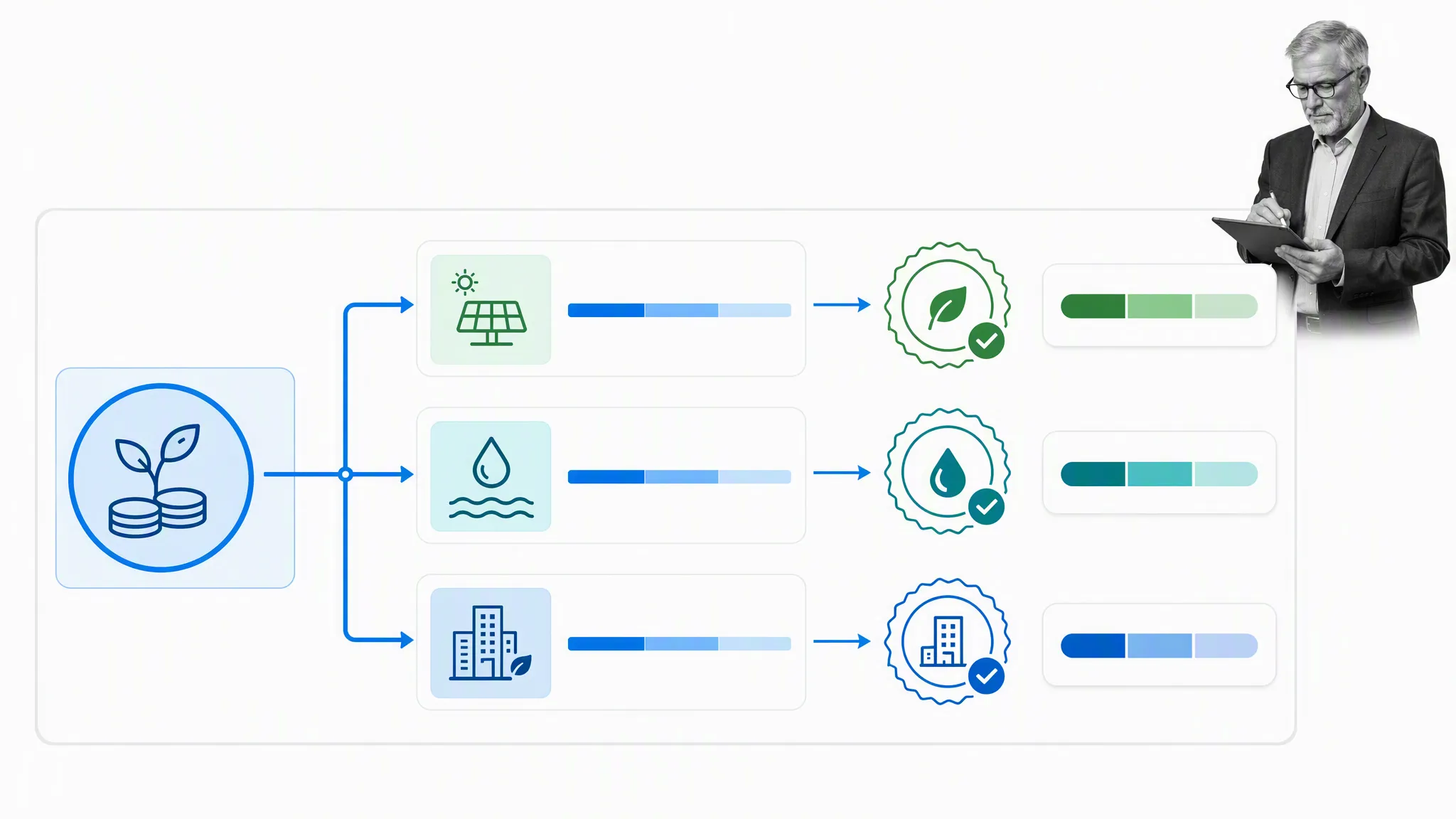
Change is constant in life, and, in the business world, this is no exception. We are beginning to see that rather than one bottom line, consideration of a triple bottom line is gaining more and more traction. Green bonds are on the rise, and there is a growing interest in sustainable developments. There is increasing investor interest in environmental, social and governance, and ESG strategies, prompting growth in sustainability-related fixed-income products. By becoming sustainable, investors recognize the improvements this will have in terms of the economic sustainability of your business, meaning you gain increased investor interest.Budget savings
To achieve a triple bottom line, cost savings are obtained through the reduction of environmentally costly activities, such as reducing water or energy consumption. If you want to know how you can reduce your own agency costs, see our Environmental Accounting Internal Audit checklist. These savings also act to reduce long-term liabilities via cost savings and lower operating costs.Boost in tax and fee revenues
Economic sustainability is all about increasing the average GDP per person. This will create a positive feedback loop, increasing local economic activity. With increased economic activity comes boosted tax and fee revenues.Improved fiscal stability
Economic sustainability creates a stable economy, one that is resilient to uncertainty such as potential rises in energy and water costs. In terms of your business, economic sustainability safeguards your profession, so that your operations are buoyant and strong in the face of change.Targeted investment
Increased savings and economic activity spur targeted investments and additional savings, revenues and economic development, which all benefit you at a business level.Operationalizing economic sustainability with Process Street
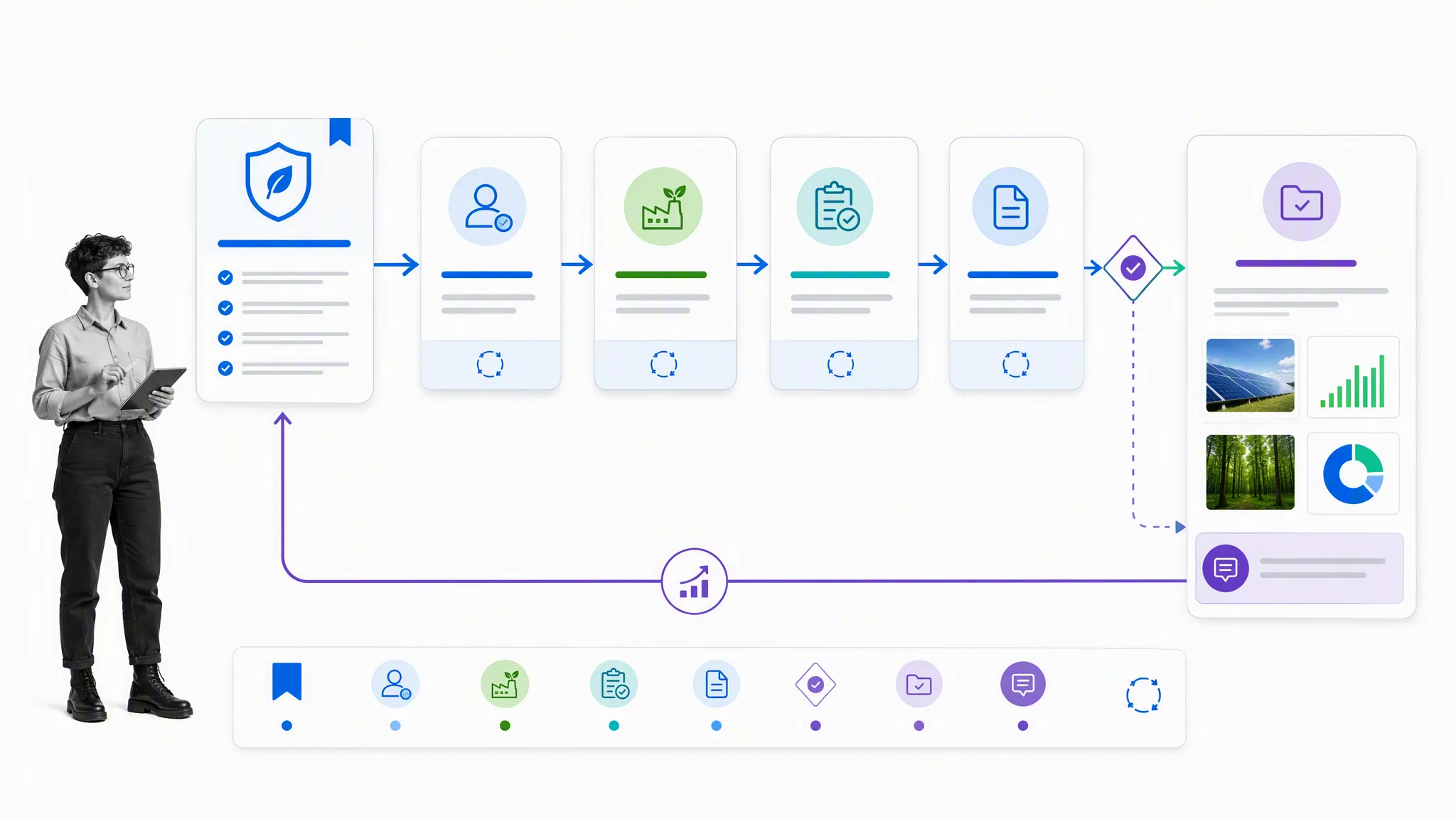
Sustainability commitments create value only when they change daily work. Process Street is a single Compliance Operations Platform with Docs and Ops capability areas plus built-in AI. Teams can govern policies and procedures, assign recurring work, route approvals, manage exceptions, and retain evidence in one connected system.
Docs provides a controlled home for policies, procedures, and operational knowledge. Ops turns those instructions into repeatable workflows with owners, due dates, forms, conditional logic, approvals, integrations, and audit trails. Built-in AI can help classify information, summarize evidence, or guide a next step within the controls the organization defines.
A sustainability program can use that structure to connect targets with execution. Supplier reviews can request evidence and escalate gaps. Energy and water routines can capture readings, investigate variance, and assign corrective action. Reporting workflows can require source data and reviewer approval before a public claim is released.
Start with one material process. Define the policy, accountable owner, required evidence, approval points, escalation criteria, and review frequency. An energy management system is one practical example of turning a resource goal into measured, repeatable work. Expand only after the team can show that the process is followed and that the evidence supports the result.
Build the baseline before choosing a target. Record the organizational boundary, data sources, units, estimation rules, and responsible reviewer. Separate absolute reductions from intensity improvements, and explain changes caused by acquisitions, divestments, or new calculation methods. This makes trends comparable and prevents a polished dashboard from concealing unstable inputs.
Connect each outcome to leading indicators. Emissions, incidents, waste, and turnover describe results after they occur. Overdue inspections, missing supplier evidence, repeated exceptions, unusual energy use, and corrective actions that remain open can show where the system is drifting sooner. Reviewing both kinds of measure gives teams time to intervene.
Procurement is another practical leverage point. Teams can define approved environmental and social criteria, request supporting evidence, document exceptions, and review supplier performance rather than relying on vague green claims. The control should make the reason for each purchasing decision visible and reviewable.
Governance should match the importance of the risk. Routine variance needs an operational owner with authority to correct it. Cross-functional tradeoffs need a forum that can balance cost, delivery, quality, people, and sustainability. Leaders need a concise view of material outcomes, unresolved exceptions, and the reliability of the underlying evidence.
Treat the program as a learning system. Review whether the procedure was followed, whether the control worked, whether the metric changed, and whether harm moved elsewhere. Preserve unsuccessful experiments and their evidence. A documented failure can prevent another team from repeating the same assumption and can point to a better intervention.
Standards can provide useful structure, but a certificate or report is not the outcome. Teams still need to understand which requirements apply, keep procedures current, train the people doing the work, and test whether controls are effective. When a standard changes, record the gap analysis, decisions, owners, and evidence used to update the operating system.
Communication should be as controlled as execution. Define who may approve public claims, what evidence must support them, and how scope or uncertainty will be explained. Specific statements about a product, facility, period, and method are more useful than broad labels. This discipline reduces greenwashing risk and gives customers, employees, investors, and communities information they can evaluate.
Finally, involve the people affected by the process. Operators often see waste that dashboards miss, suppliers understand technical constraints, and local communities can identify effects outside the facility boundary. Record what was heard, which concern changed the decision, and why other suggestions were not adopted. That record improves accountability and gives the next review cycle a stronger starting point. Review the evidence at a consistent cadence, publish material limitations, and revise responsibilities whenever data shows that the intended outcome is not being achieved.
Reconnect with your wild side – reduce your ecological footprint and become economically sustainable
In this article, we have:- Attempted to redefine what economic sustainability is. We have considered what it means for each individual of the 7.7 billion that occupy our planet today.
- Learned about projects bringing this new, sustainable economy to the forefront of economic development.
- Considered the benefits economic sustainability can bring in a business sense.
- Given actionable resources to help show you how you can create a business that is more sustainable so that you can start working to achieve economic sustainability today.
The post Economic Sustainability For Success: What It Is And How To Implement It first appeared on Process Street | Compliance Operations Platform.