











CX Design: How to Craft & Deliver Excellent Customer Experiences
Blog: Blog | Process Street | Compliance Operations Platform
Customer experience design is the practice of deliberately shaping every interaction a customer has with an organization across the end-to-end journey. It connects customer evidence, service standards, and operational ownership so the experience works as intended.
Customers do not experience departments. They experience one brand across discovery, evaluation, purchase, onboarding, product use, support, billing, and renewal. CX design gives teams a method for seeing that whole system and improving the moments that matter.
CX design defined
Customer experience sounds like a broad, rather vague business function, and that’s because it is. CX is concerned with optimizing the experience for customers at every touchpoint (any way a customer can interact with a brand). For example, if a person sees a commercial and would like to go ahead and make a purchase, what steps have been taken to make that experience as smooth as possible? It is the responsibility of the CX team to optimize the customer journey so purchases can be made in a way that leaves the customer satisfied and with a lasting impression of the quality service they received.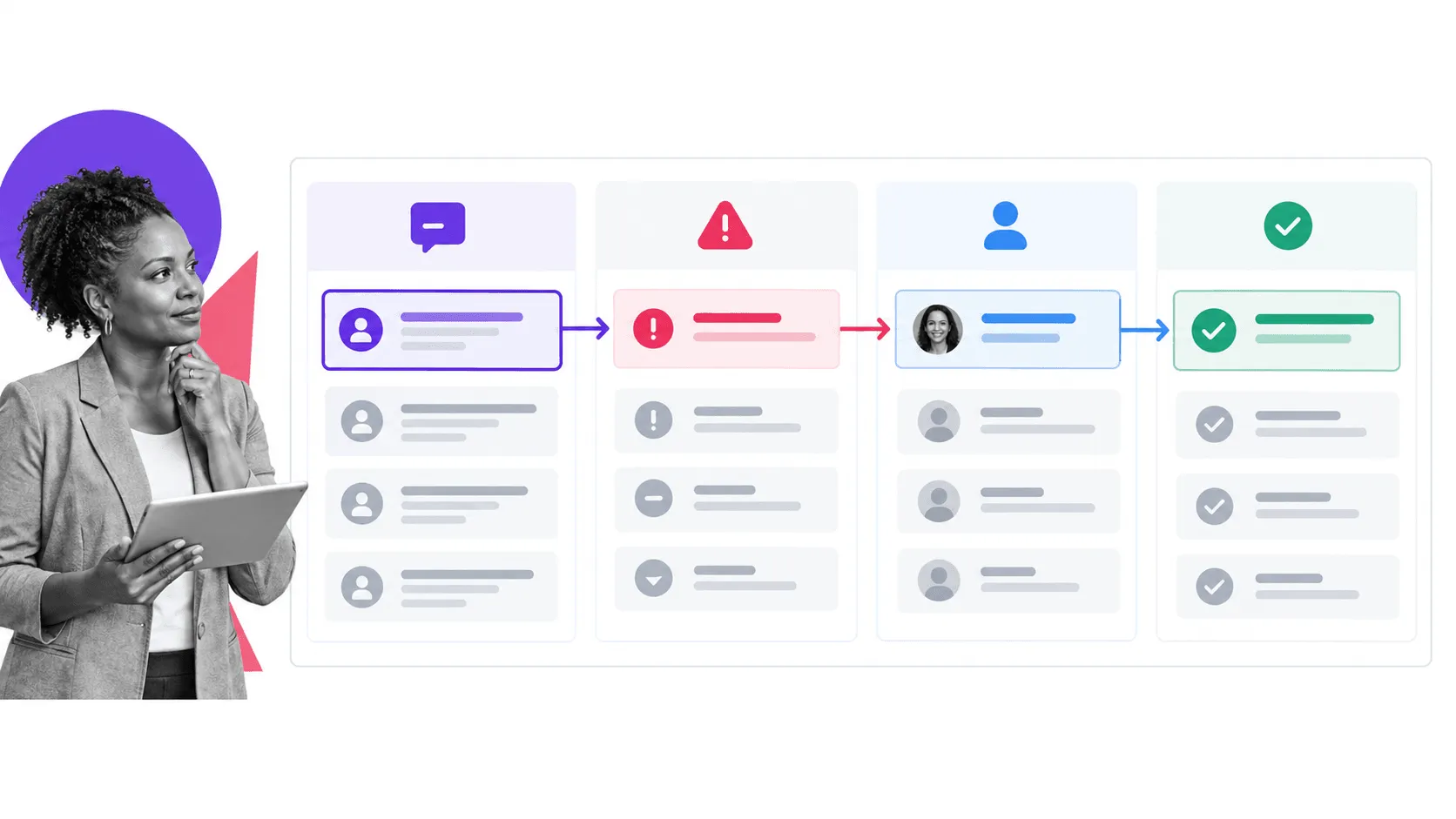
CX design compared with UX design
This is perhaps the most common question people ask when they are first introduced to the concept of CX design. The distinction can be explained in both simple and complex terms. The simple way to explain the difference is that UX design works with the product, while CX design works with the brand. In other words, UX designers are responsible for creating an enjoyable user experience within a mobile app, website, or other kinds of software that customers engaged with. On the other hand, CX designers are focused on aligning business goals with the entire experience of a customer during any interaction with a brand. Therefore, there is a significant amount of overlap, in that UX is a component of CX.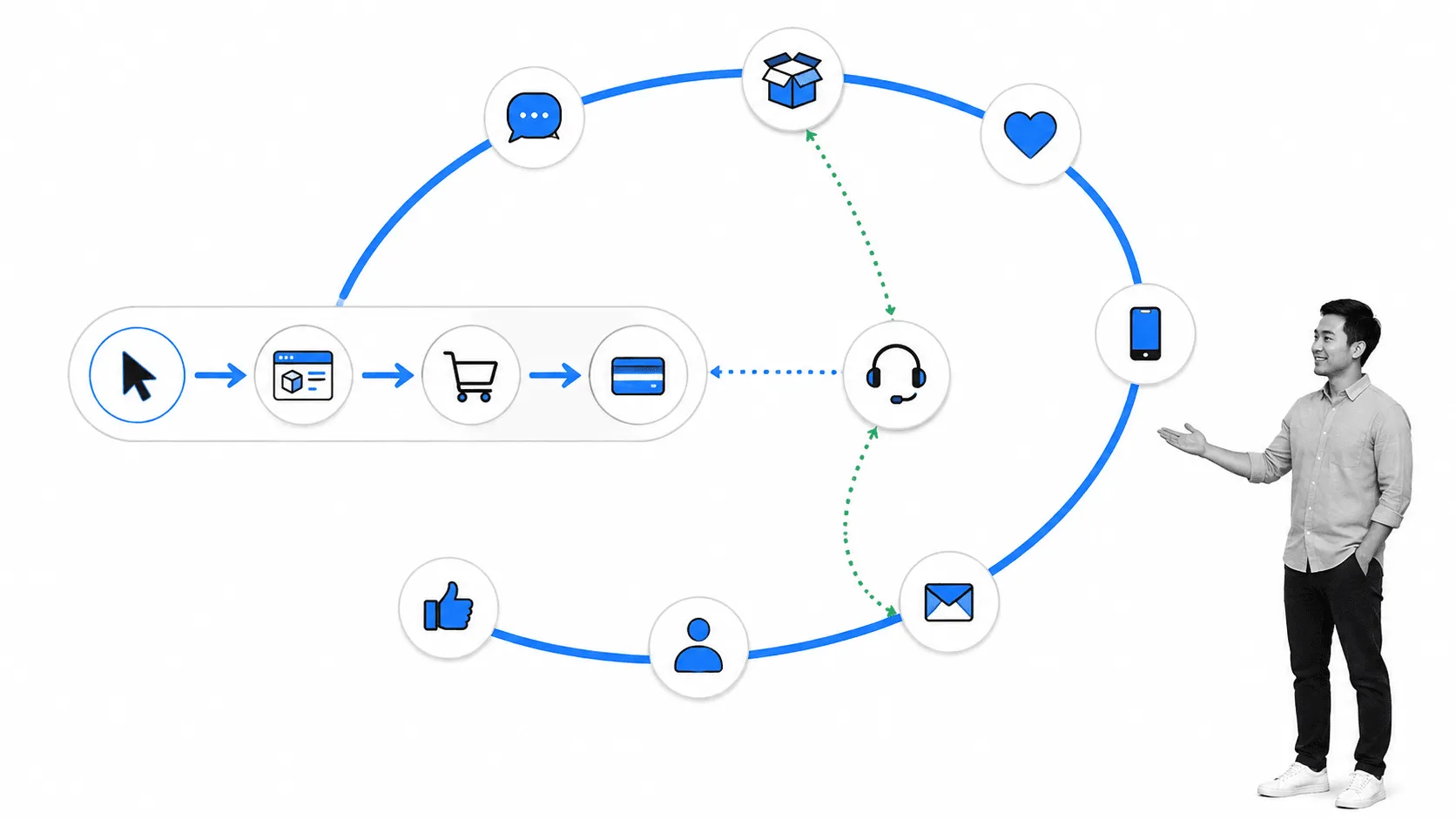
User experience focuses on a person’s interaction with a product or service. Customer experience includes that interaction and every surrounding touchpoint with the organization.Although it is written clearly and makes perfect sense, there are a lot of buzzwords in that excerpt that can make it a little difficult to understand. A simple way to think of it is that CX design is concerned with all aspects of UX like usability and visual design, while also placing an equal amount of focus on the sales process and customer service. It’s simply broader in scope, as there is obviously a lot more involved in the overall customer experience than there is in UX or customer service as a standalone function.
Key principles of CX design
The following principles help organizations turn CX intent into consistent service standards.- Understanding a customer journey in all the channels where customers appear is vital for the creation of winning customer experiences.
- Customer experience is totally subjective, so interactions and touchpoints must be personalized.
- Offline customers no longer exist, so get ready for ongoing cross-channel interactions and conversations with the brand.
- Knowing that at any touchpoint there’s always a chance that users may drive away and choose a competitor should foster ongoing user experience optimization.
- Customer experience has a direct impact on how much money users are ready to spend on the mobile app or website.
- Inviting customers to participate in conversations with a brand and collaborate with it as partners helps to provide better customer experiences and improved brand offers.
- Customer experience design enhancements must be based both on financial data (how customer spends money) and observational data (what customer actually does interact with the brand).
- You cannot create truly excellent customer experiences without first having a solid understanding of the customer journey in all available channels.
- Customer experience is not some fluffy buzzword that has no direct relation to financial prosperity. To the contrary, it has a direct impact on purchasing decisions and has the potential to greatly improve the bottom line.
- Experiences must be continuously optimized as standards increase among competitors and customers are more likely to turn away at a given touchpoint.
- CX design initiatives must be supported by financial data as well as observational data to ensure they are addressing the right issues and forwarding business goals.
6 essential components of CX design
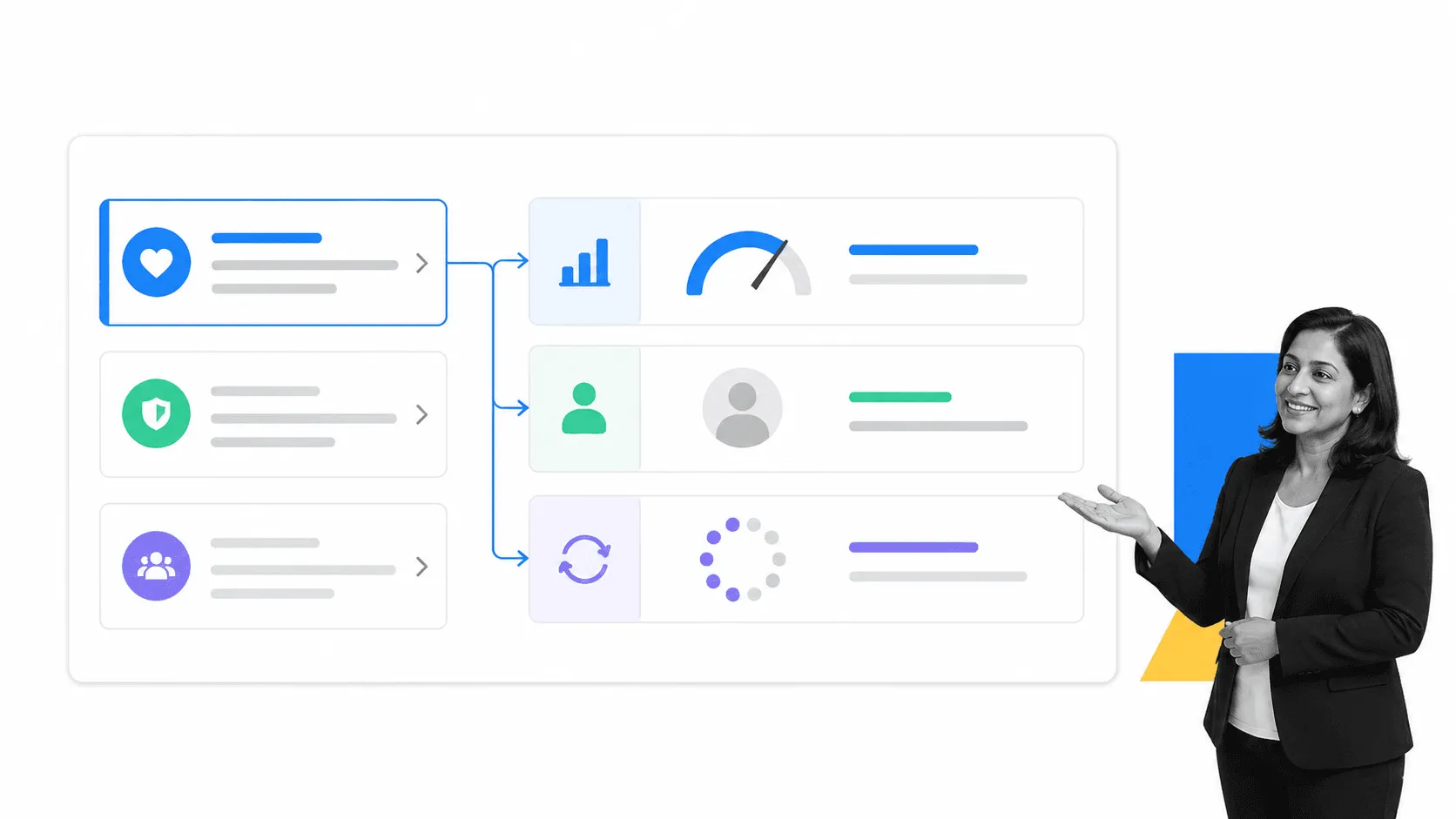
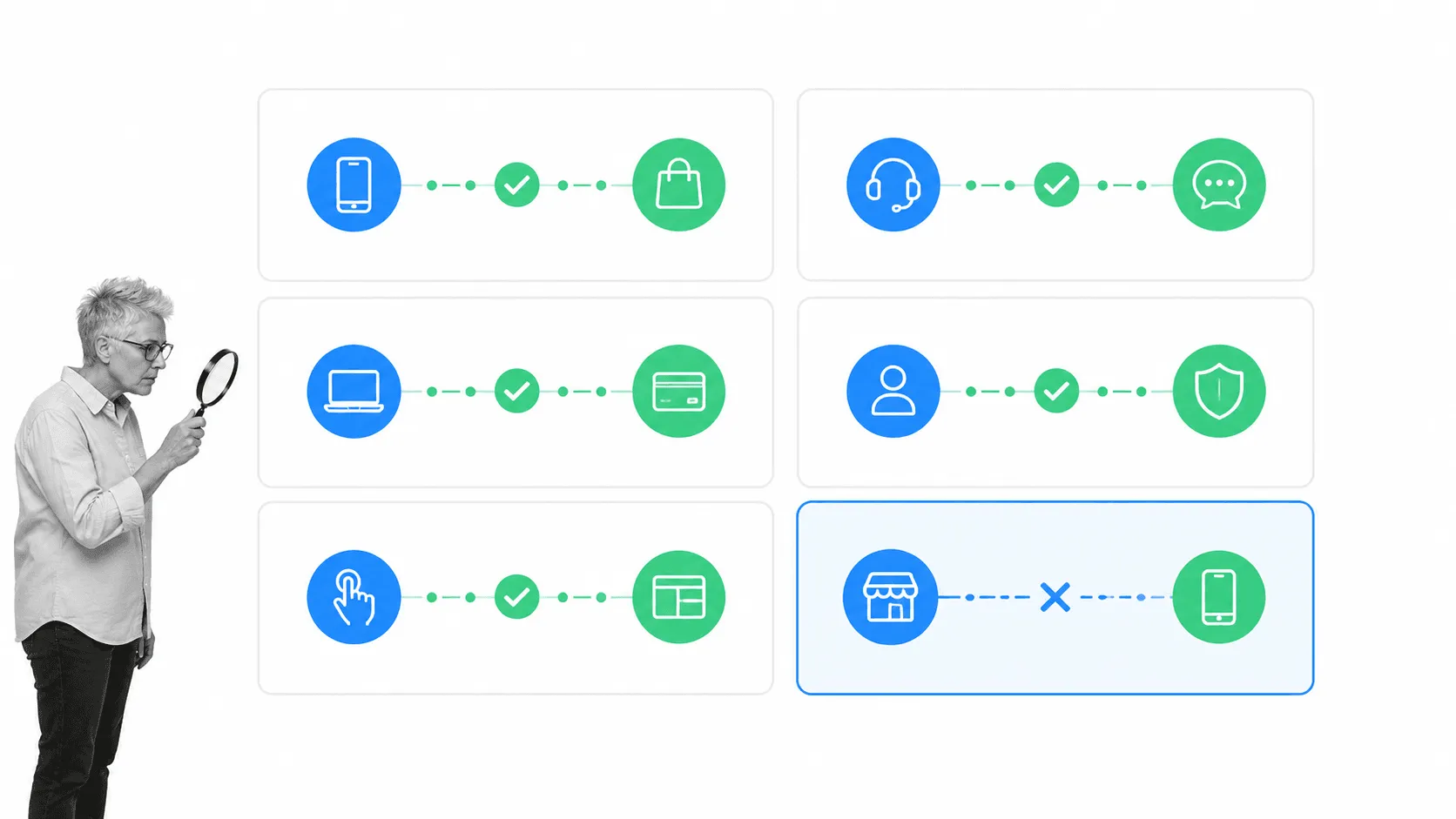
Now that we’ve highlighted some key principles that must not be overlooked if a CX design strategy is to be successfully implemented, let’s go over the main components of CX design to understand which aspects of service delivery need to be continuously optimized. A practical CX diagnostic covers six core areas:- Reachability: This is concerned with the existence and reliability of digital channels, and what strategies are used to attract customers to those channels. Is it easy for customers to interact with your business?
- Purchase convenience: How seamless is it the purchasing process for your customers? Is product and price information clear and up-to-date?
- Service convenience: How frictionless is the digital service experience? Are there tools to find more information like FAQs and self-service knowledge bases?
- Personalization: How well does your business meet/cater to individual customer needs?
- Simplicity and ease of use: Are service/informational channels optimized for mobile?
- Channel flexibility: Is context about the customer being used and applied across all channels? Is there a history of behavior, transactions, and conversations across touch points available for each customer?
Building a CX design strategy
So, we have a decent understanding of why CX is so important and what the essential components of a CX strategy are. The next thing is to provide some top tips on how you can go about crafting a CX design strategy that will help you achieve the results you’re looking for. Before we go into some specific pointers, however, it’s important to mention that a CX design strategy is a long-term play (as most strategies are). It is not something that has the ability to produce notable results in a few weeks. It takes a considerable amount of time to understand the customer journey and identify real opportunities for improvement at various touchpoints.The customer journey map tells the story of different customers’ touchpoints with a brand,as seen from the customers’ points of view. For each customer segment, the customer journey map shows a timeline detailing the customer’s interaction with the brand at various touchpoints, often also describing emotions, motivations, and context. A customer journey map helps identify gaps in the customer experience. – The Interaction Design Foundation, Customer Experience (CX) DesignThis initial process of gathering information and working purely on building an understanding of what you’re working with must not be rushed. The customer journey is the foundation of CX design and if not properly understood, will seriously limit the success of experience enhancement initiatives. And so, simply respect the fact that CX design optimization takes time, and you’re off to a good start. This point about taking the time to really understand customer personas and journey mapping conveniently leads us into the initial steps that need to be taken when crafting a winning CX design strategy.
Understand your target audience
The first step is to really understand who you are speaking to, so you can then work on speaking the same language. As straight forward as it may sound, we all know how complex and unpredictable us humans are, so it takes patience and in-depth research to really nail down the profile of your target customers. A good rule of thumb is to develop 2-5 personas of your customer base and build experiences for your most valuable segments. These personas should include a demographic profile, attributes, motivations, needs, and pain points. Ultimately, the purpose of CX design is to build emotional connections with your customers, and the first step to doing this is understanding who those customers are, what they want, and how they want it. An effective way to gather this insight is to conduct customer interviews and internally analyze the data gathered with a group of team members.Create a clear CX vision
Creating a “vision” sounds fluffy and ambiguous, but the easiest, most practical way to do this is to create a set of statements that act as guiding principles and can be communicated throughout the organization. What kind of experience do you want your customers to have? What kind of experience most accurately reflects the values of your organization? Much of this vision can be captured in your company’s set of core values, which should be incorporated into all areas of training and development so all team members are on the same page with regards to what lies at the heart of the organization.Map out the customer journey
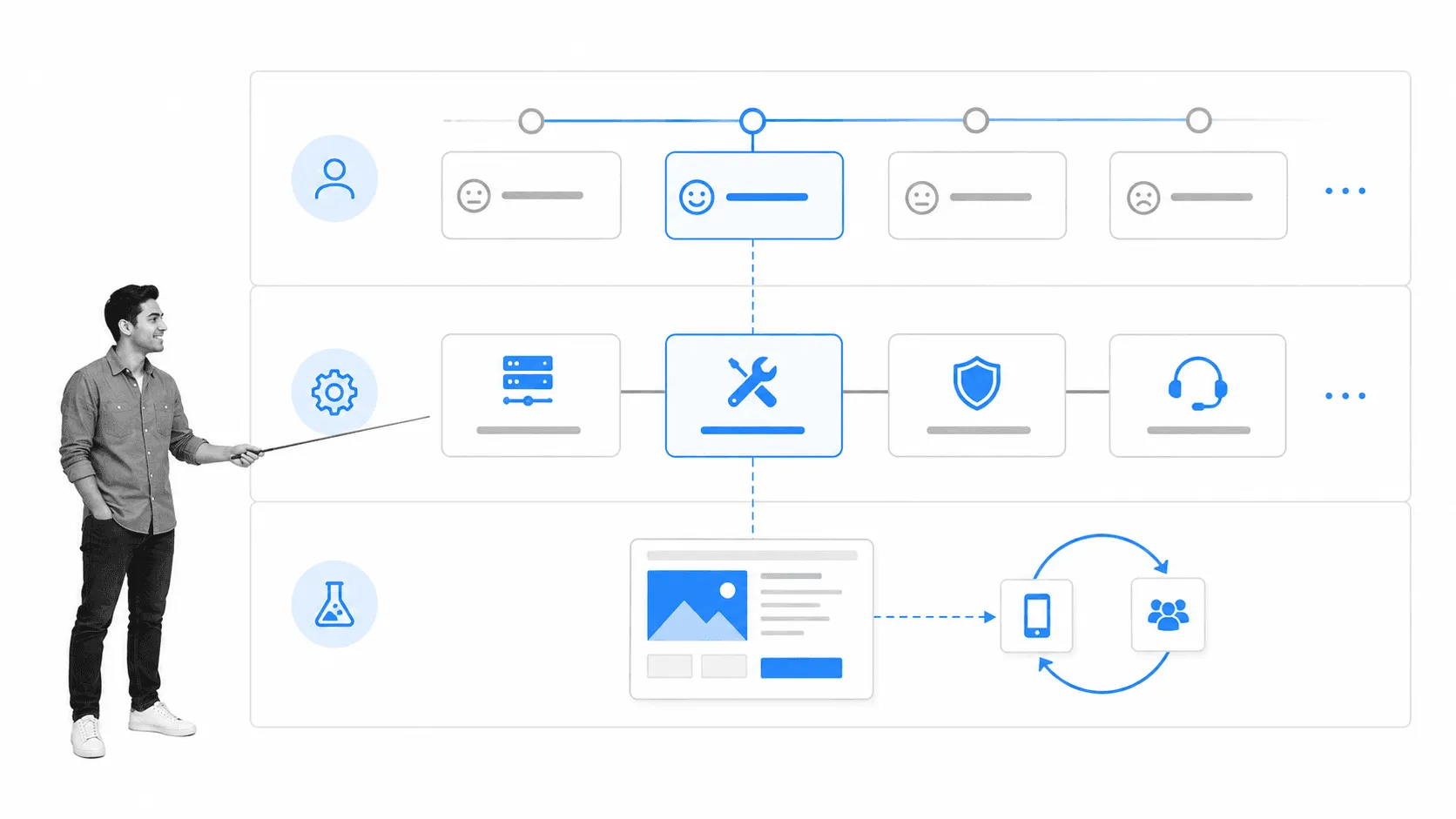
This is a big one. A customer journey map is designed to provide a clear view of the end-to-end experience of your customers; a way of visually representing customer’s actions, needs, and perceptions throughout their interaction with your product or service. Creating a customer journey map is relatively straight forward, pick a persona, identify all potential interactions, and map out the key steps across the journey that would eventually lead to a transaction. An effective way of identifying the key interactions throughout the customer lifecycle is to use the 5 A’s customer journey mapping framework. The framework is as follows:- Attract, How are customers attracted to and informed of the service or product?
- Accept, How does the customer enter into dealings with your organization?
- Adopt, How does the customer interact throughout the entire experience?
- Amplify, How do you leave the customer feeling at the end of the interaction?
- Advance, How do you follow up with customers and extend the current relationship?
Create emotional connections
Salesforce’s State of the Connected Customer research continues to track how trust, understanding, and consistency shape customer relationships. Today’s customers demand more than a sound product or service. They want to feel valued and appreciated by the businesses they are interacting with and handing over their hard-earned cash. Therefore, the importance of creating and maintaining emotional connections with your customers cannot be overlooked, or they will not hesitate in turning to a competitor that makes them feel appreciated. If you have taken the time to identify your target audience and build clear customer personas, then the task of creating emotional connections is much easier, because you know what they want, and can create products and experiences that meet their demands.Capture feedback in real time
How are your customers receiving the services you offer? What do they think of the user experience and customer support services? Collecting this insight is incredibly important to continuously optimizing their experience, and the best way to do it is, surprise surprise, asking them! Send follow-up emails to customers following their interactions and include post-interaction surveys to gather information about their experience. You can also speak with customers directly, but respect their time and preferences. Route feedback into an owned service-recovery process so urgent issues reach the right person and recurring patterns inform the next design decision.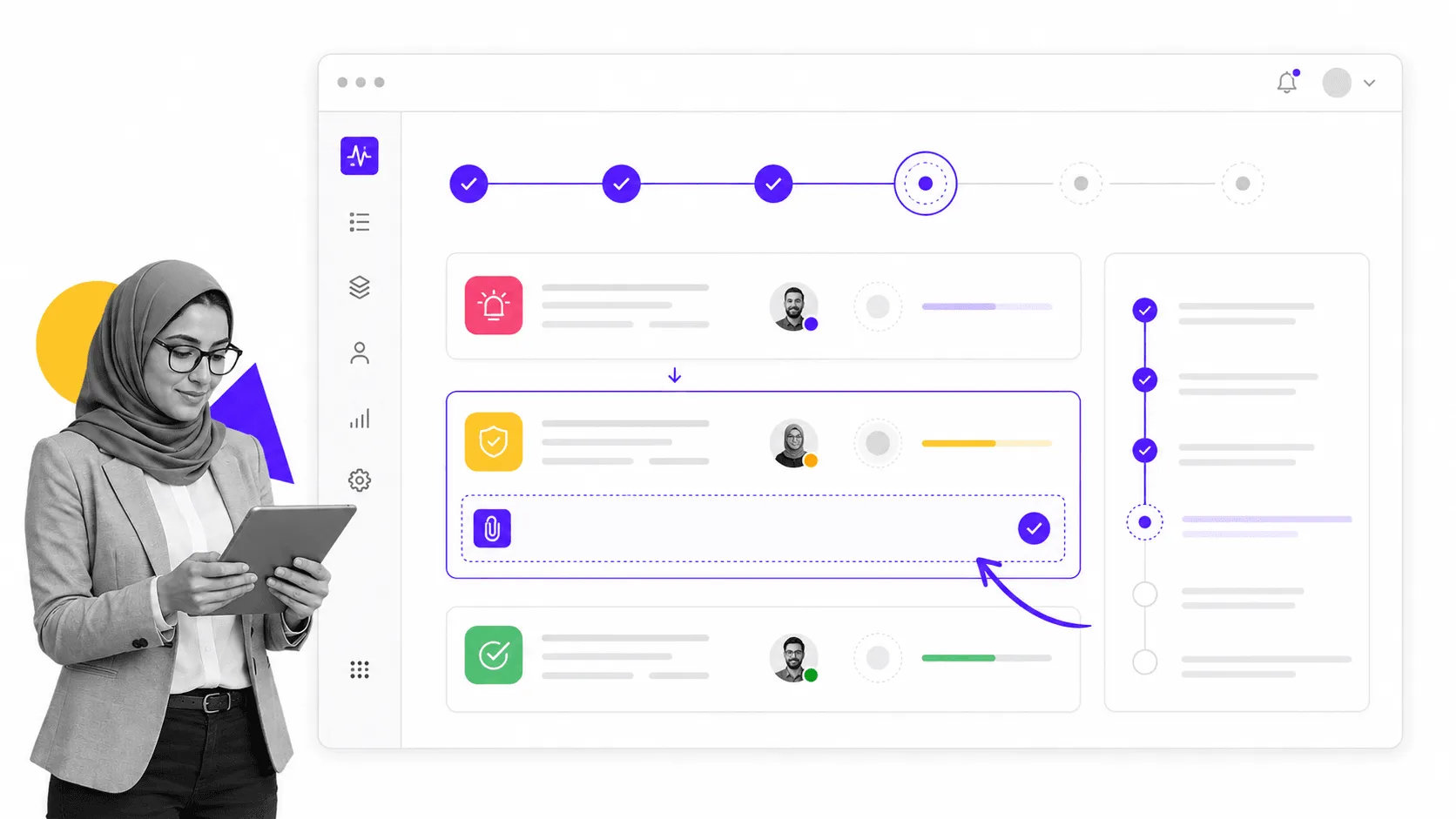
Measure journey performance
CX measurement works best when broad relationship indicators are paired with operational measures for specific journey stages. Retention, renewal, loyalty, and advocacy can reveal whether the relationship is strengthening. They do not, by themselves, identify the handoff, delay, policy, or interaction that created the result. Add measures that teams can influence directly. Examples include time to complete onboarding, effort required to resolve an issue, first-contact resolution, repeat contacts, abandonment, wait time, successful self-service, delivery accuracy, recovery time, and the percentage of feedback items that receive an owned response. Qualitative interview and support evidence explains why those numbers move. Set a baseline before changing the experience. Define the customer segment and journey stage, record the expected outcome, identify the owner, and decide when the team will review the result. This avoids a common trap in which a high-level score is reported while no one owns the moments that drive it. Treat measurement as part of the design cycle rather than a final report. Observe the journey, identify friction, prioritize the opportunity, change the service or process, and compare the new result with the baseline. Keep guardrails for accessibility, fairness, privacy, and service quality so a faster or cheaper interaction does not create a worse experience elsewhere. When teams can trace an outcome back to evidence and an owned change, CX design becomes a disciplined operating practice instead of a collection of isolated improvements.Traits of a great CX designer
To further clarify the distinction between a UX and CX designer, and maybe even help you in your search for an all-star CX team, it’s useful to go over a few characteristics that define a great CX designer.Customer-centric mindset
The meaning of the term “customer” in the context of CX must not be misunderstood. It is not referring only to individuals or other businesses that have already made a purchase of some sort. A customer refers to any person that interacts with the company including prospects, partners, and end users. A CX designer needs to have a comprehensive understanding of why and how customers interact with the business in order to place themselves in their shoes. This is much easier said than done because humans are complicated, and we make purchasing decisions for all kinds of different reasons. Therefore accurate customer segmentation is essential for a designer to understand what kind of persona the company is attracting and how they can go about optimizing their experience at every touchpoint.Thinking far beyond the product
Unlike UX designers, CX designers need to focus on a lot more than just the product user journey. All customer interactions with marketing, sales, customer service, support, self-service learning as well as the product itself must be taken into consideration. Seeing as it is concerned with a variety of business functions, it’s beneficial if the CX designer has a good amount of experience in less technical business roles like sales and marketing.Solving ambiguous, complex problems
After all, working to enhance an experience that can take place in so many different places requires a high-level of patience and recognition of complexity.CX design requires people to connect research, service operations, product decisions, and measurement across functions. The problems are rarely confined to a single screen or team.There are no straightforward problems that have obvious, clear-cut solutions. Coming up with and implementing effective solutions requires in-depth research, creativity, and collaborative effort to truly enhance the experience for all customers.
Challenging assumptions with compelling data
Initiatives to enhance the customer experience must have a strong foundation of data and research to support whatever measures are being taken. It is the responsibility of the CX designer to challenge internal assumptions with well-sourced data and provide compelling information to support certain changes that will provide customers with a better experience. A great CX designer will always recognize the importance of data. Because the day-to-day tasks of a CX designer are relatively vague, as are the metrics for job performance, managers and other team members will likely lose confidence in a designer that fails to support design improvement initiatives with sound, credible research.Turn CX design into consistent operations
Process Street is a Compliance Operations Platform. It is one product with Docs and Ops capability areas plus built-in AI. Docs helps teams govern journey maps, service standards, research plans, policies, and decision records. Ops turns those standards into repeatable onboarding, support, escalation, approval, and improvement workflows with clear owners and due dates. Built-in AI can help teams find knowledge, summarize feedback, and assist with routine work inside those controls.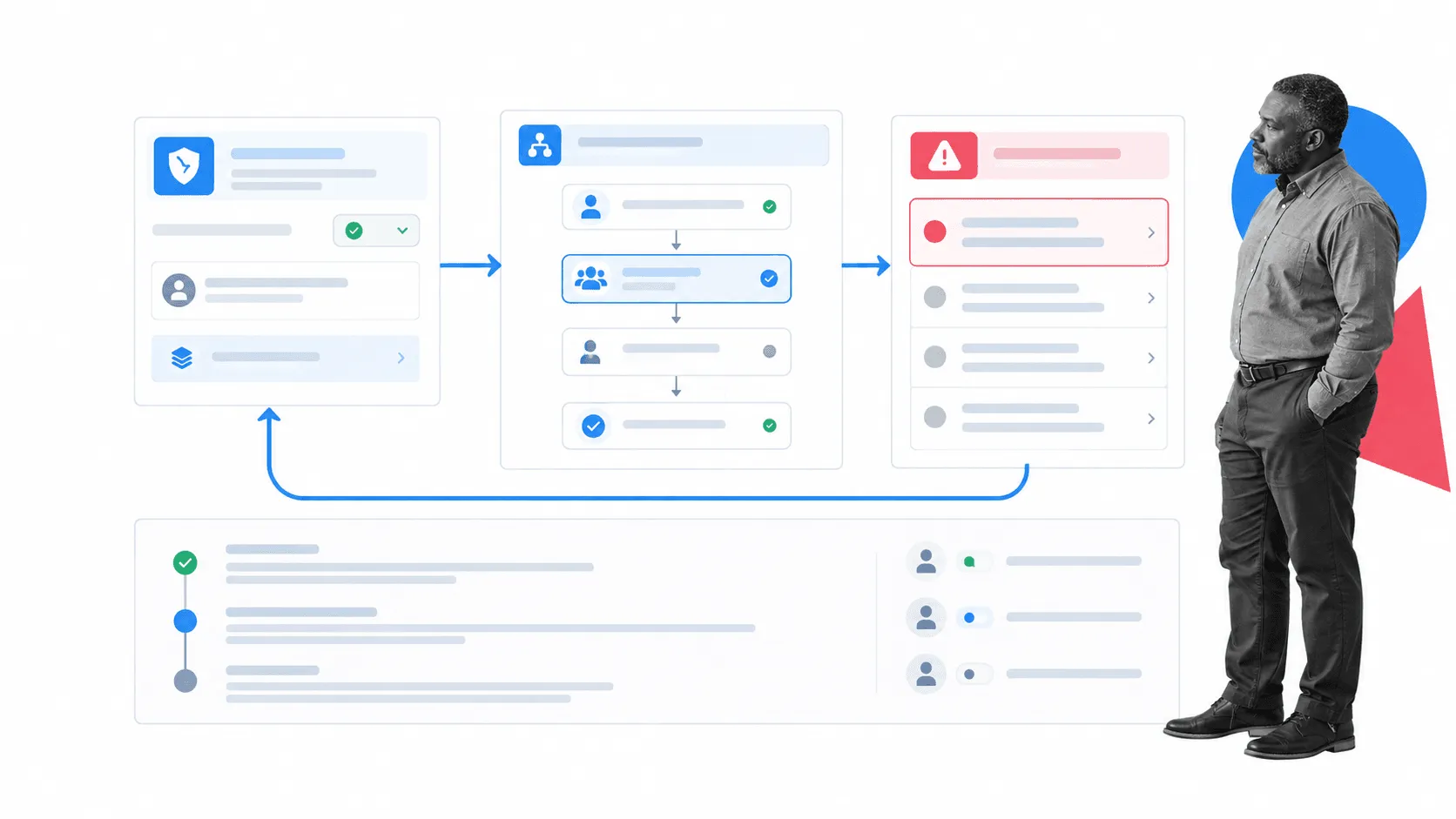
CX design FAQs
What is customer experience design?
Customer experience design is the practice of deliberately shaping every interaction a customer has with an organization across the end-to-end journey.How is CX design different from UX design?
UX design focuses on a person’s interaction with a product or service. CX design includes UX plus marketing, sales, onboarding, delivery, support, billing, renewal, and other brand touchpoints.How do you measure CX design?
Combine relationship measures such as retention and loyalty with journey measures such as completion, wait time, handoff quality, effort, recovery time, and direct qualitative feedback. Tie each measure to a journey stage and an owner.The post CX Design: How to Craft & Deliver Excellent Customer Experiences first appeared on Process Street | Compliance Operations Platform.