











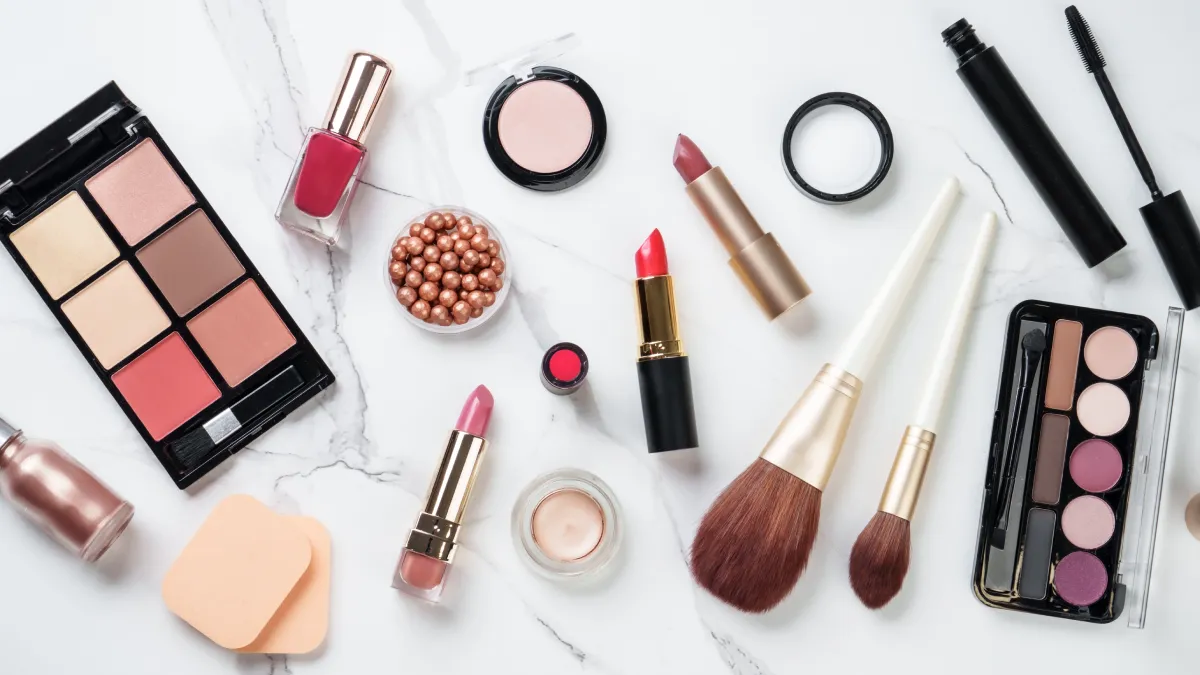
Cosmetic anti-counterfeiting as a growth strategy
Blog: OpenText Blogs

Counterfeit cosmetics have moved well beyond a supply chain headache. Today, they're eating into brand trust, putting consumers at risk, and quietly eroding revenue that's hard to win back.
The numbers back this up: the global counterfeit market peaked at $500 billion last year (OECD, 2025) but the real pressure beauty and dermo-cosmetic brands feel is more immediate: how do you prove your product is the real thing, at the exact moment a customer is holding it?
That question is getting harder to answer. Ingredient transparency is now table stakes. Consumers expect it. And with third-party cookies on the way out, the old playbook for capturing customer data doesn't work anymore.
So some brands are rethinking the product itself as the engagement channel.
When each SKU can be tracked, connected, and scanned in real time, a tube of serum or a box of SPF becomes something more than packaging; it becomes a conversation. One that can verify authenticity, share ingredient sourcing, personalize recommendations, and capture first-party data, all in a single tap.
The gap between physical product and digital experience is closing. And the brands moving fastest aren't the ones treating this as a loss-prevention problem. They're the ones treating it as a growth strategy.
Why traditional thinking falls short
Omni channel leaders may think that tracking mass consumer products doesn’t make sense. And historically, that has been true. Mass-market cosmetics move in enormous volumes, run on thin margins per unit, and get distributed across channels that are notoriously hard to coordinate. Tracking at the unit level felt like solving a problem that didn't exist.
But three shifts have quietly broken that logic:
1. The shelf is now a digital channel
Today, every product can become a media channel. When a consumer picks up a moisturizer, foundation, or sunscreen, that moment is:
- More powerful than an ad impression
- More contextual than a website visit
- More actionable than a loyalty email
By assigning a unique digital identity to each product, brands can:
- Deliver personalized content at the point of use
- Trigger replenishment journeys
- Guide skincare routines
- Build direct consumer relationships beyond retail
2. The cookie-less world demands product-led data
With third-party cookies disappearing, brands are losing visibility in customer behavior. But what if the product itself becomes the data source?
Instead of relying on indirect signals, brands can:
- Capture real-time interaction data at scan
- Understand where and how products are used
- Build micro-segmentation at SKU level
No more broad assumptions.
No more generic personas. Just real behavior, tied to real products.
3. Precision matters: SKU-level intelligence changes everything
Mass messaging destroys trust.
If a specific batch or SKU has an issue, sending a blanket notification to all customers can:
- Create unnecessary panic
- Damage brand equity
- Reduce conversion
SKU-level tracking enables:
- Targeted communication
- Controlled recalls
- Hyper-precise engagement
In fact, brands using serialization and real-time tracking have seen:
- 70% reduction in counterfeits
- 30% faster recalls
- Significant fraud reduction
This isn’t just operational efficiency, it’s brand protection at scale.
Why dermo-cosmetics is the inflection point
While mass cosmetics may still debate unit-level tracking, Dermo-cosmetics doesn’t have that luxury. This category sits at the intersection of beauty, health, and clinical trust.
Consumers expect ingredient transparency, proven efficacy, safety assurance. And increasingly authentication before usage.
In this space, anti-counterfeiting is not optional—it's core to the value proposition because counterfeit lipstick is a brand issue...but a counterfeit dermo product is a health risk.
Beyond anti-counterfeiting: The hidden revenue engine
The real opportunity lies in using anti-counterfeiting as a foundation to unlock product-triggered growth loops and sustained revenue. Imagine this:
- A consumer scans a moisturizer and receives a personalized skincare routine.
- A sunscreen scan triggers replenishment reminders based on usage patterns.
- A serum scan unlocks loyalty rewards and influencer content.
- A product scan enables instant sharing to TikTok® or Instagram®.
This transforms:
- Products into engagement platforms.
- Consumers into connected ecosystems.
- Brands into always-on relationships.
What grey market scan data is telling you
Even for leaders who don’t believe grey markets are a major concern:
Scan data tells a different story
High scan activity in unauthorized regions and unexpected channels can signal channel leakage, unauthorized redistribution, and demand mismatches. This is not enforcement.This is commercial intelligence.
Sustainability as a trust layer for beauty brands
Gen Z and Gen Alpha are redefining what trust means. It’s no longer just about product quality and brand reputation. It’s about ingredient sourcing, environmental impact, and recyclability.
Connected products enable brands to tell a verified sustainability story, provide transparency at the point of use, and support circular economy models.
From supply chain control to consumer intelligence
Anti-counterfeiting in cosmetics is evolving.
Old model:
- Reactive
- Backend
- Cost center
New model:
- Proactive
- Consumer-facing
- Revenue driver
The product is the platform
The future of beauty is a blend of physical and digital experiences—it's phygital—where every product becomes:
- A trust anchor
- A data source
- A marketing channel
- A loyalty engine
The brands that win will not ask “Should we track products?” They will ask “What experiences can we unlock once every product becomes intelligent?” In categories where trust is non-negotiable, OpenText Core Product Traceability Service (CPTS) ensures every product proves its authenticity and unlocks a deeper relationship with every consumer.
The post Cosmetic anti-counterfeiting as a growth strategy appeared first on OpenText Blogs.