











9 Essential Marketing Tips from the Father of Advertising
Blog: Blog | Process Street | Compliance Operations Platform

Ogilvy on Advertising was one of the first books I had on my reading list back when I created my system for reading more. My only regret after finally reading it is having delayed for a year and a half.
Drawing from 40 years of experience, David Ogilvy shows what he learned from creating some of the most successful advertising campaigns of the twentieth century. The father of advertising was blunt, occasionally hostile, and never pretending to be infallible, but many of the marketing tips he championed decades ago still hold up because they are grounded in customer behavior, research, and clear writing.
From using research instead of rules to reminding yourself exactly what you are paid to do, Ogilvy provides a useful lens for improving as a marketer and copywriter.
“When I got a margarine account, I was under the impression that margarine was made from coal. Ten days reading the literature taught me otherwise.” – David Ogilvy, Ogilvy on Advertising, p.11
Finding those nine golden tips in more than 220 pages of case studies and niche information is a chore. Here is the condensed version: a practical Ogilvy on Advertising summary for marketers who want the principles without losing the grit.
Use research, not rules
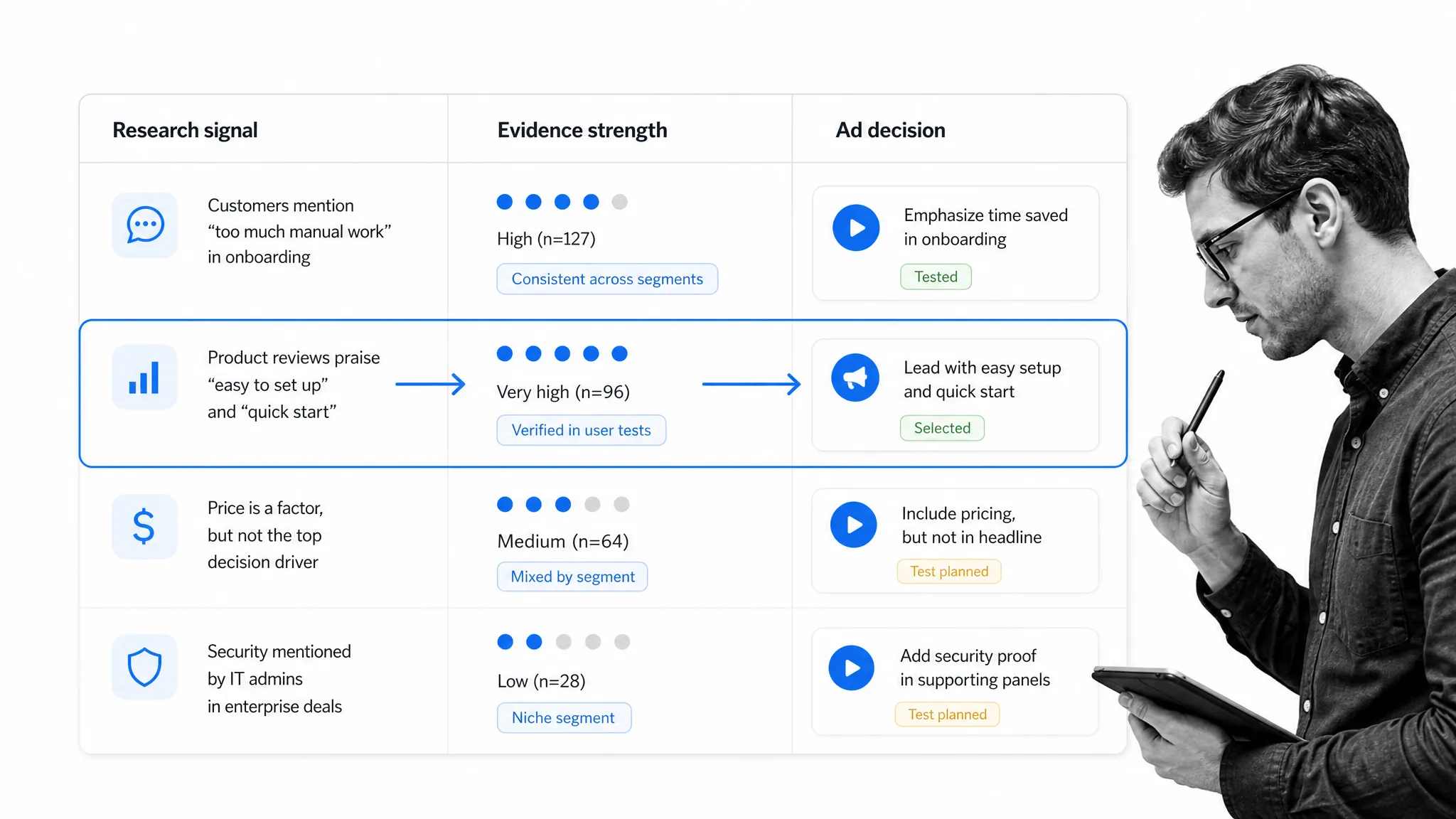
If there is one thing to take away from Ogilvy on Advertising, it is that the man was obsessed with the power of research.
From which fonts perform best, to color selection, layout, positioning, and even character count, Ogilvy had masses of research to draw from to inform his decisions when creating a new ad.
Having said that, within the first two pages of his introduction Ogilvy denies enforcing “rules”.
“I hate rules. All I do is report how customers react to different stimuli.” – David Ogilvy, Ogilvy on Advertising, p.7
Ogilvy did not treat rules as commandments. He treated them as patterns pulled from observed behavior. That distinction still matters. A rule says white text on a dark background is bad. Research asks whether people can read the message, remember it, and act on it. The UX Movement readability piece on white text on a black background is a useful reminder that context decides whether a principle helps or hurts.
There is always a chance that your case will be different from what people saw before. Ogilvy knew that, which is why he was careful to report evidence rather than worship the rule itself.
Organize your research

Research is useless if you cannot retrieve it later. In fact, this is one of Ogilvy’s main criticisms of researchers in advertising agencies:
“Even if somebody remembers that the research was done, nobody can find it. So we re-invent the wheel, year after year.” – David Ogilvy, Ogilvy on Advertising, p.36
If you cannot reliably retrieve the information you gather, you force yourself to repeat the work just to discover the same thing again. In a marketing team, that means lost interview notes, forgotten customer language, disconnected swipe files, and campaign lessons that never make it into the next brief.
The modern version is not just a bookmark folder. Keep a searchable research library, connect notes to campaigns, and turn repeatable work into a content workflow your team can actually run. Process Street helps teams document the process in Docs, execute it in Ops, and use built-in AI to keep recurring work moving without losing the context that made the campaign useful in the first place.
Do not limit research to the latest marketing blog. Current examples from ProBlogger, Backlinko, Reddit communities, product pages, customer calls, sales notes, and your own campaign results all have value if you can find them when the next brief lands.
You’re not paid to be “creative” or “original”
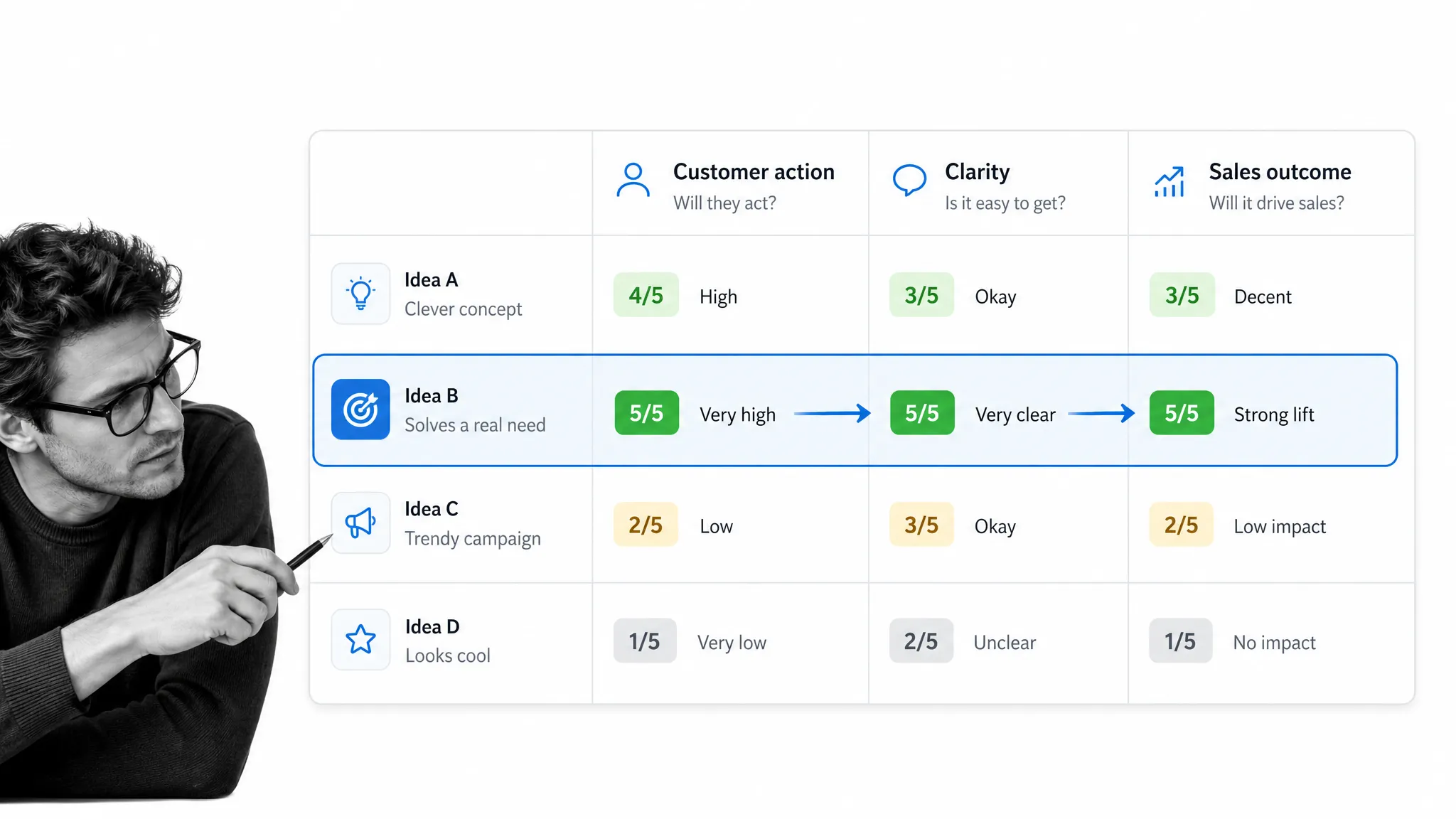
It is nice to say that we are “creatives”. It feels good to imagine pushing the limits of our fields with original ideas and breaking new ground. You do not want to be just another copywriter doing the same thing as everyone else. You want to stand out.
But you are not paid to be creative for its own sake. You are paid to fulfill a purpose.
Whether you are introducing a product, pushing an affiliate link, or guest posting to earn backlinks, you are not being paid merely to be original. You are being paid to persuade the right audience to take the right action. If original work helps that happen, use it. If it distracts from the job, cut it.
“If it doesn’t sell, it isn’t creative.” – David Ogilvy, Ogilvy on Advertising, p.7
Ogilvy despised advertising awards because he believed they rewarded agencies for impressing other advertisers rather than helping clients sell. He cites a brutal pattern:
“Of 81 television classics picked up by the Clio festival in previous years, 36 of the agencies involved had either lost the account or gone out of business.” – David Ogilvy, Ogilvy on Advertising, p.25
That does not mean craft is irrelevant. It means craft has to serve the business outcome. The same agency network still wins major creative awards, including recent Clio recognition from Ogilvy, but Ogilvy’s warning still lands: applause is not the same as effectiveness.
You can’t force good ideas (but knowing a lot helps)

We have all had a time when inspiration struck in the most unlikely circumstances. Maybe you were singing in the shower, or perhaps you were sound asleep and the idea came in a dream. That is how Ogilvy said he thought of Pepperidge Farm’s iconic horse-drawn carriage ad.
This happens because the best ideas often come from your subconscious, but your subconscious needs material to work with.
“Big ideas come from the unconscious… But your unconscious has to be well informed, or your idea will be irrelevant. Stuff your conscious mind with information, then unhook your rational thought process.” – David Ogilvy, Ogilvy on Advertising, p.16
If you do not already have a deep bank of facts, examples, customer language, and failed attempts, forcing yourself to “ideate” on demand usually produces obvious work. Research gives your brain and your team better raw material. Even AI assisted brainstorming works better when the model has the right inputs, not just a vague request for ideas.
Take in the facts, then give yourself enough space for the connections to form.
Knowledge separates the good from the great

If you are literate, you can write. If you can write, you can type. If you can type, you can write a blog post. If you can write a blog post, you can technically produce content.
It is not complicated to learn the basics of almost any trade on the planet, and Ogilvy knew this. There is a limit to how quickly a person can write and how accurate their spelling and grammar can be. So what separates a good copywriter from a great one?
Knowledge.
“There isn’t much to choose between surgeons in manual dexterity. What distinguishes the great surgeon is that he knows more than other surgeons. It is the same with advertising agents. The good ones know more.” – David Ogilvy, Ogilvy on Advertising, p.21
Good writing mechanics get you into the game. Product knowledge, customer knowledge, market knowledge, and the discipline to keep learning are what make the work useful. That is why the best marketing tips from David Ogilvy keep circling back to research: the person who knows more has more ways to make a useful claim.
“Taboo” content can sell, but only when relevant

For the sake of your business, do not use taboo content unless it is relevant. Sex, swearing, controversy, and shock can get attention, but attention alone is not a strategy. If the tone does not fit the product, the audience, or the buying moment, it will only make the work weaker.
Ogilvy knew this through research. If your purpose is to sell more of a product, it does not matter whether you personally find something offensive. What matters is whether your target audience will be offended, distracted, or motivated.
There are two questions to ask before using a taboo angle:
- Would your ideal customer enjoy, understand, or benefit from this angle?
- Does it make the product more persuasive, or does it only make the ad louder?
Ogilvy’s early AGA cooker sales work is still a useful example because the lesson was never “be shocking.” The lesson was to study the buyer and sell in language that fits the situation. Current summaries of his AGA sales manual still point to the same core behavior: learn the customer, avoid cheap attacks, and make the product’s value concrete.
If you’re not passionate, quit

Due to how bluntly he writes, Ogilvy can come across as overly harsh and even antagonistic. He has no problem calling out mistakes he sees in other people’s advertising, and he readily dismisses critics who call him old-fashioned.
So when he turns motivational, it reads like a backhanded compliment.
“There are no dull products, only dull writers.” – David Ogilvy, Ogilvy on Advertising, p.18
This is Ogilvy touching on the need to be interested in the thing you are selling. If you cannot find anything worth saying about the product, the audience will feel it. You will reach for jargon, novelty, or shock because you have not found the real reason someone should care.
That does not mean every assignment has to feel glamorous. It means you need enough curiosity to keep digging until the product becomes specific. A dull writer gives up at the surface. A good one keeps looking for the customer, use case, proof point, or contradiction that makes the work alive.
Don’t use pretentious jargon

Complicated jargon is a surefire way to lose your audience. Nobody cares how many dictionaries you have eaten or thesauruses you have memorized. If all you do is vomit complex words, you will both bore and alienate the people you are trying to engage.
You are not being paid to show off your vocabulary. You are being paid to engage an audience. An audience that does not know or care what “effervescent” means will not reward you for using it. If you are trying to build a blog or credible campaign, just say “fizzy” instead.
This point is especially relevant to B2B marketing. It is easy to hide behind language like “robust,” “holistic,” “next generation,” and “best in class.” Clear writing is harder because it forces you to decide what you actually mean.
Ogilvy’s advice here is simple: respect the reader. Say the thing plainly.
Don’t fix what isn’t broken

As Ben Brandall pointed out in his branding case study, a number of Ogilvy’s most successful ads ran for decades. His campaign for Hathaway shirts helped the brand break out after more than a century of small-time success. His SAAB winter car theme was iterated for years. Dove’s Beauty Bar positioning still lives on current Dove product pages, even as the executions change.
“You aren’t advertising to a standing army; you are advertising to a moving parade.” – David Ogilvy, Ogilvy on Advertising, p.20
That is why a working idea can keep running. The individual people who see the campaign change over time, even if the campaign itself stays consistent. If the core promise still works and the audience has not exhausted it, changing the campaign just to feel fresh can destroy compounding value.
Obviously, this is not an excuse to let stale work rot. Measure what is working, refresh what is weak, and keep the strongest promise intact. Do not confuse your own boredom with the audience’s.
Conclusion

Ogilvy never intended for his teachings to become a rule book that must be followed at all times. Especially when considering the technology we now have access to, applying everything he says without judgment would miss the point.
Instead, take these nine marketing tips and apply them to your own copywriting and advertising. Research other posts, books, customer conversations, and campaign results. Compare their advice, test what matters, and keep what works.
After all, Ogilvy was not asking marketers to obey him. He was asking them to pay attention.
The post 9 Essential Marketing Tips from the Father of Advertising first appeared on Process Street | Compliance Operations Platform.