











7 Insightful Company Policy Tips from Basecamp’s Employee Handbook
Blog: Blog | Process Street | Compliance Operations Platform

While we were writing our guide to writing an employee handbook, it was striking how few public employee handbooks there were out there to read. Obviously, most companies don’t want to expose their internal workings, and that’s sometimes for a good reason. However, you can usually trust startups, excluding Uber and Zenefits, to be transparent about their operations.
And, when it comes to transparency, Basecamp’s handbook is an amazing example. It’s both a useful resource for companies looking to write their own policies from scratch, and a genuinely interesting read. In fact, it might be the first interesting company document I’ve ever read.
The handbook got a good amount of attention when Basecamp shared it publicly in an article on Signal v. Noise, and even persuaded 1Password to build an added security feature based on how Basecamp uses the tool abroad. And so, since Process Street helps teams turn policies and procedures into governed, auditable workflows, here are a few things you can learn from Basecamp’s handbook.
Here are the 7 best lessons from Basecamp’s handbook, and how you can use what you learn in your own business.
Policies are 100% necessary (if you want your company to survive when it grows)
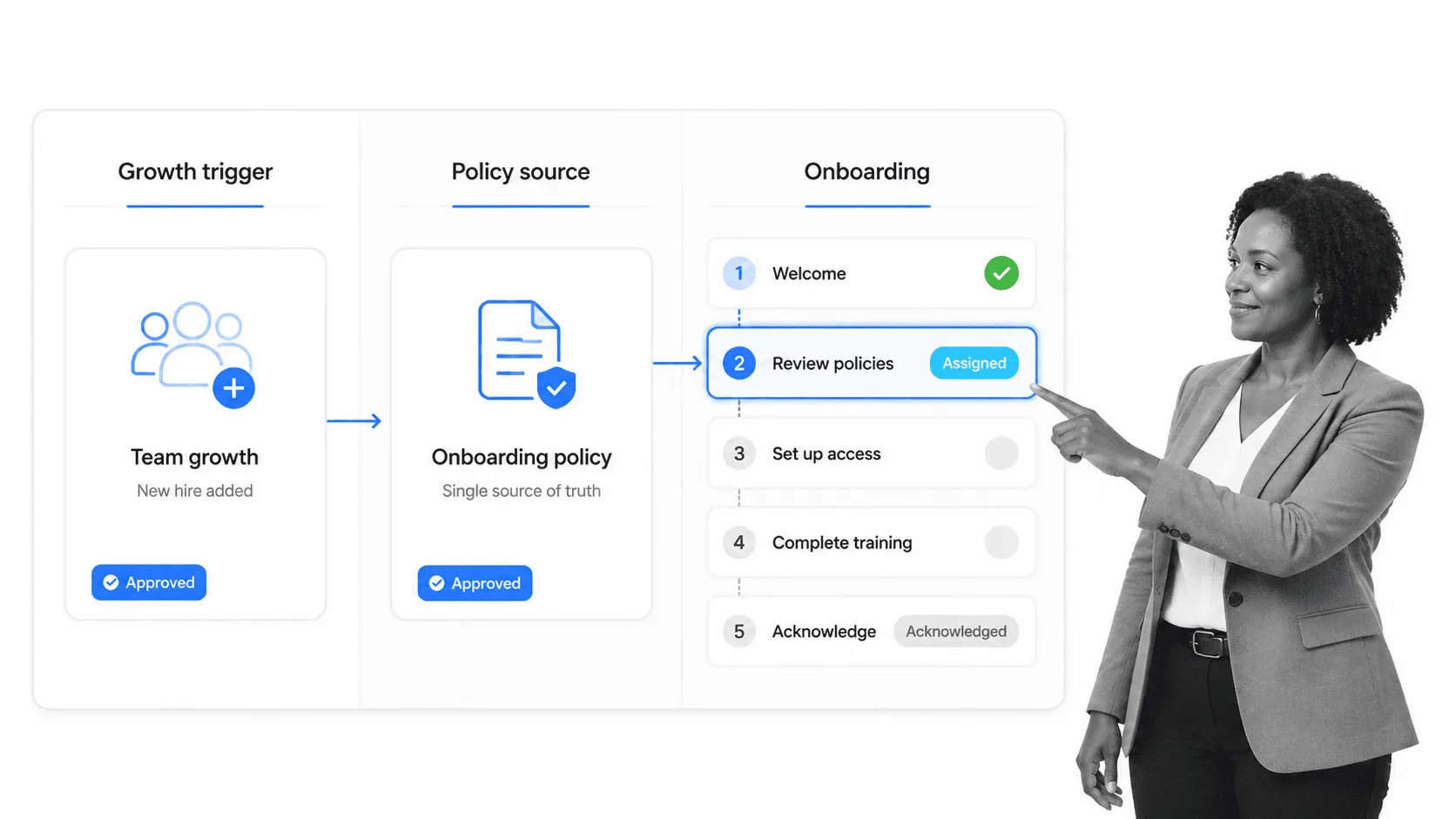
As regular readers will know, we’re devoted to showing why having set systems and processes can protect you from falling apart when the growth wave hits. When you have documents that act as the single source of truth, you can be sure everyone always knows what they’re doing, and that there aren’t any disputes over the ‘correct way’ to do work.
Basecamp opens up its handbook with a paragraph about why they eventually found it necessary to implement set policies:
“For over 10 years, we didn’t have a handbook. In those 10 years, when a new person joined the company, they were expected to figure things out for themselves. But when we grew from a company of 10, 20, 30 employees to a company of over 50, our “introduction by immersion” style stopped working. New hires felt lost and isolated, and their first weeks or even months on the job were stressful because of it. It can be unnerving to join any company, but perhaps Basecamp in particular, given how different some of our practices are. There’s as much to unlearn as there is to learn. Prior to this handbook, navigating that path was both somewhat random and almost entirely oral. For a company that prides itself on clarity and writing, that just wasn’t right.”
As any business grows, it gets harder to control and curate what a new hire might learn and experience. Introducing a handbook as part of your employee onboarding process makes sure you can help new hires get off to the best start possible, and not leave it up to chance that they absorb company policy through some mystical form of osmosis.
Introduce employees to what’s strange about your company
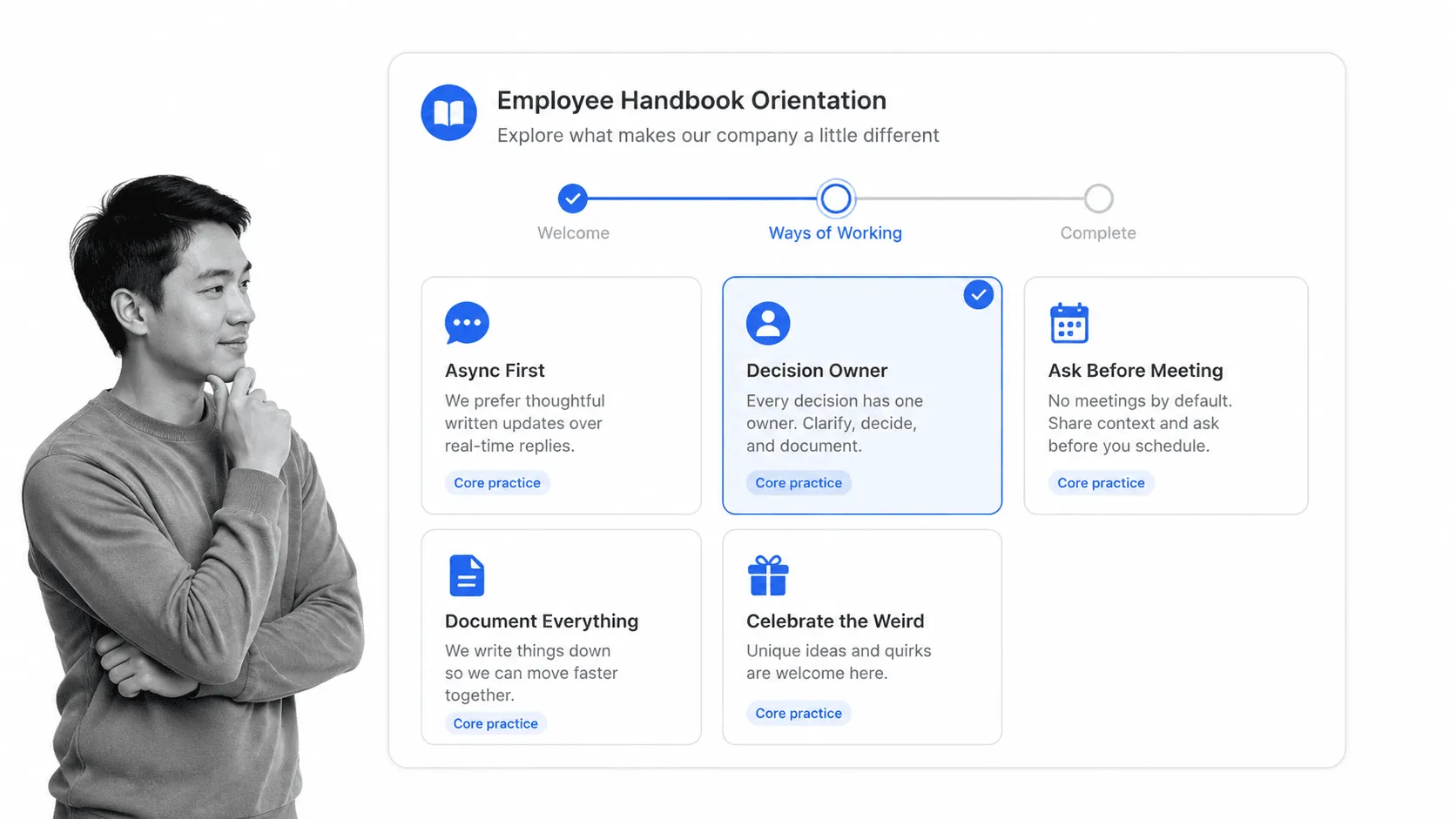
It’s not hard to accidentally exclude new hires because the way you do things is so different to what they’re used to. In fact, the whole point of a handbook is to reduce that shock by priming new team members first.
In Basecamp’s employee handbook, they explain the unusual language and operating habits that shape how work gets done. The current public handbook keeps that same spirit in sections about how the company works and the internal systems employees use, giving new hires context before they have to navigate the company on their own.
“Everyone working at Basecamp represents Basecamp. When a customer gets a response from Merissa on support, Merissa is Basecamp. When a customer reads a tweet by Eron that our systems are down, Eron is Basecamp. In those situations, all the other stuff we do to cultivate our best image is secondary. What’s right in front of someone in a time of need is what they’ll remember.
That’s what we mean when we say marketing is everyone’s responsibility, and that it pays to spend the time to recognize that. This means avoiding the bullshit of outage language and bending our policies, not just lending your ears. It means taking the time to get the writing right and consider how you’d feel if you were on the other side of the interaction.”
For example, at Process Street we have set policies for Slack communication as well as a tendency to get very silly in group chats. It’s possible that a new hire might not be used to either of these things, so a handbook like Basecamp’s can act as a primer.
Inspire new hires with your enthusiasm (and don’t lose great talent)
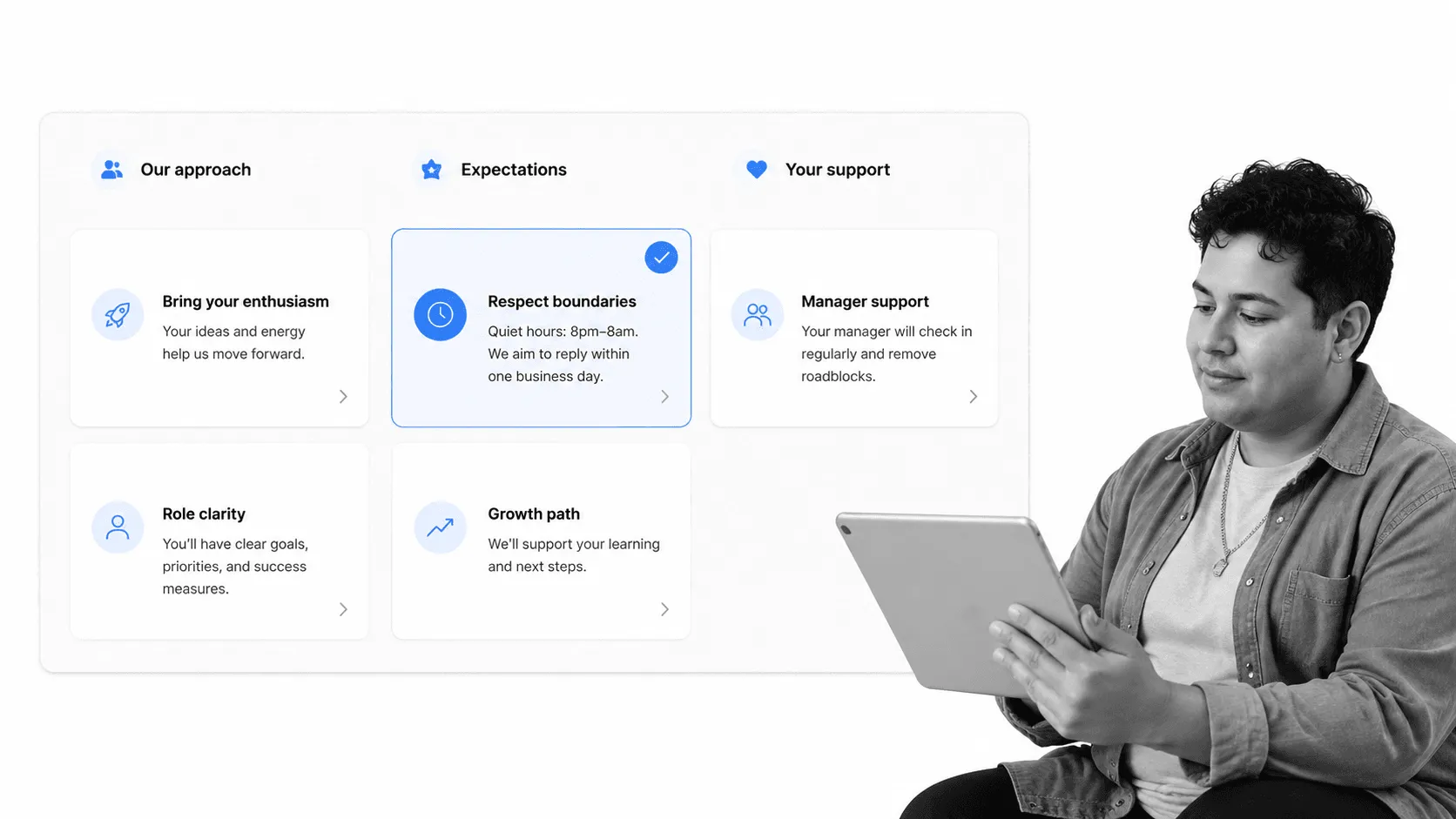
I’m not joking when I say that Basecamp’s employee handbook is an exciting read. It sums up everything invigorating and hopeful about working in a startup, and will easily convince new and prospective hires that Basecamp is a great work environment.
“It’s also worth mentioning that joining Basecamp can be all-consuming. We’ve seen it happen. You dig Basecamp, so you feel pressure to contribute, maybe overwhelmingly so. The people who work here are some of the best and brightest in our industry, so the self-imposed burden to be exceptional is real. But here’s the thing: stop it. Settle in. We’re glad you love this job because we all do too, but at the end of the day it’s a job. Do your best work, collaborate with your team, write, read, learn, and then turn off your computer and play with your dog. We’ll all be better for it.”
Basecamp’s inspirational lines are packaged as a warning. Warning: Basecamp’s so great you might love it too much. Don’t go too crazy, though. Relax and have fun.
When writing policies and handbooks, try to include information about your company culture, the attitude of employees, and your company’s strengths so new hires know what to expect. If you’re deciding whether company policy belongs in a static document or a governed workflow, Process Street’s guide to policy management vs document management explains the difference.
Avoid confusion by making your company’s structure clear
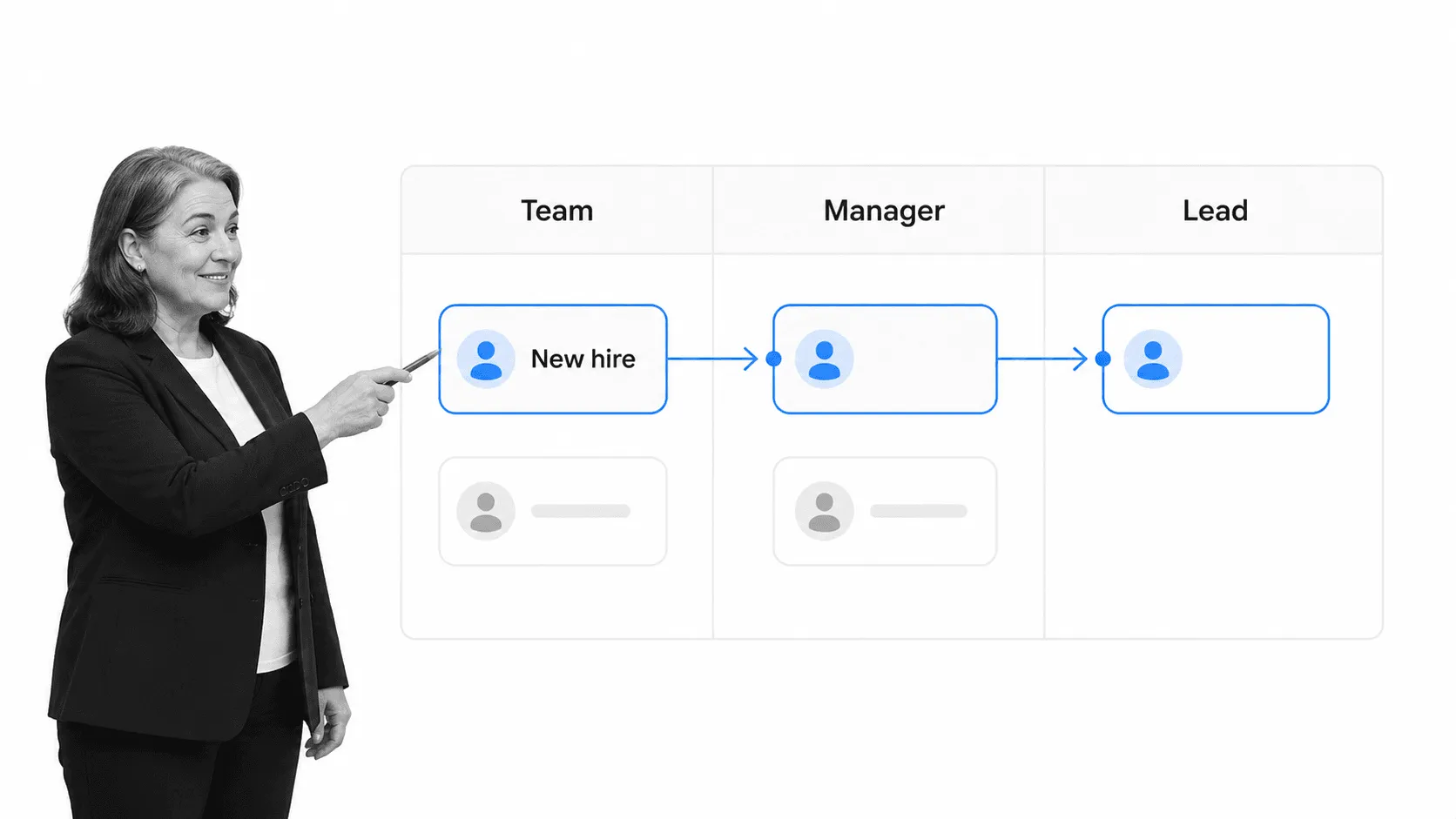
Basecamp’s handbook doesn’t have an org chart as such, but it does give employees a clear way to understand roles, titles, and how work is organized. The current handbook’s section on making a career at 37signals helps explain how people can grow, what titles mean, and how employees should think about their place in the company.
One of the big reasons Basecamp made a handbook in the first place was to help orient interns who didn’t know who to report to.
“When new people were hired, they were largely left to figure out how the company worked on their own. Our new hires were tasked with maintaining, improving, and supporting Basecamp’s products without any context about how those products came about. Our interns admitted they didn’t know who at Basecamp did what job, so they had trouble all summer knowing who to ping with questions.”
Even a company of just 50 people can be confusing for a newcomer, but don’t worry: this guide to creating an org chart shows a quick way to make your structure clear from a spreadsheet of role titles and names.
Write clear guidelines for side-projects and moonlighting
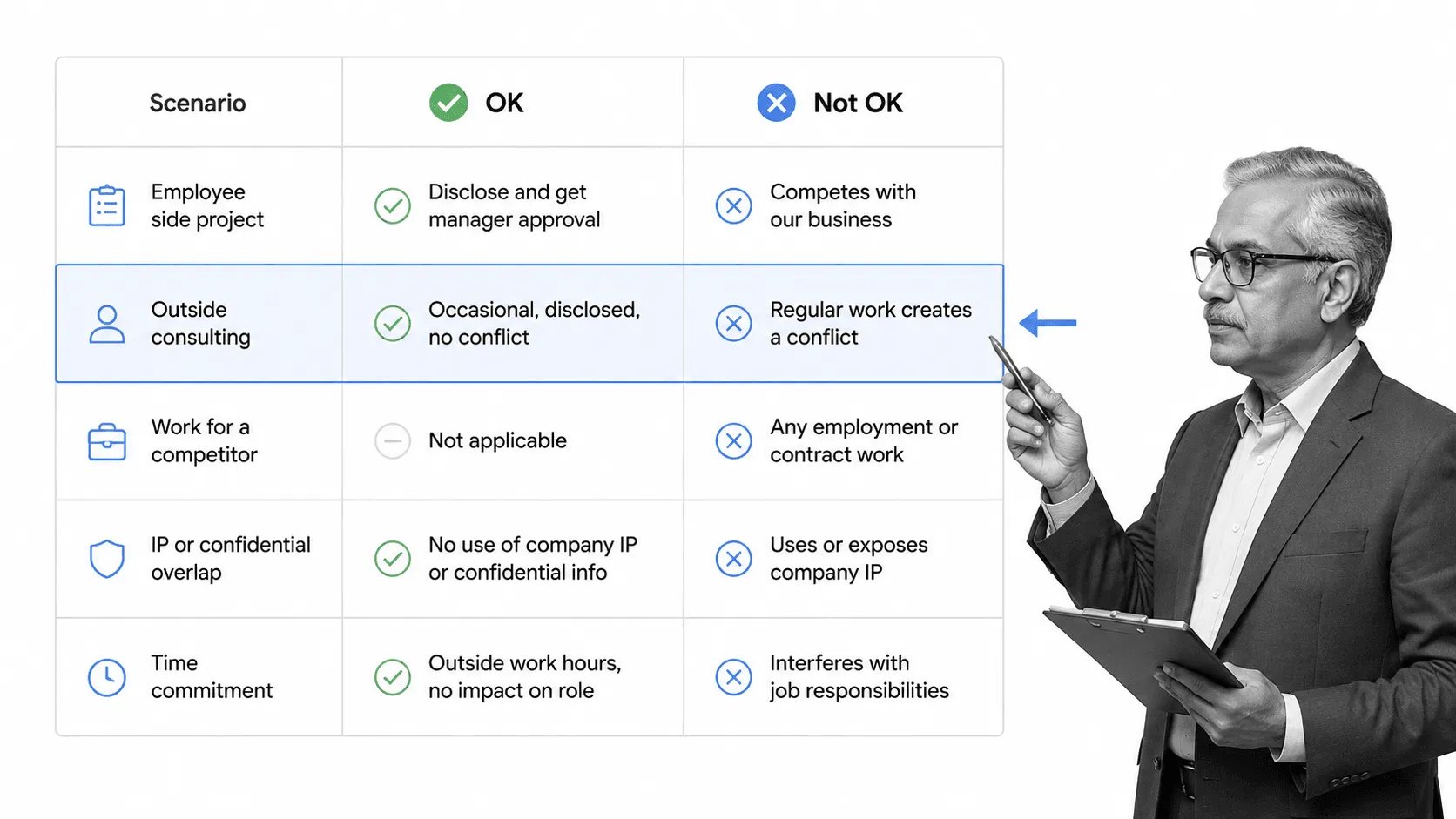
In an ideal world, CEOs wouldn’t have to restrict what their employees do in their spare time, but Basecamp realizes that some side projects have the tendency to get out of hand. The handbook isn’t at all draconian about its moonlighting policy; it explains the balance instead of trying to own every hour of an employee’s life.
The handbook contains a definition of what moonlighting is, and then goes on to describe OK and Not OK situations.
“Moonlighting means working other professional, paid jobs outside of your work at Basecamp. It’s not a black and white topic. There are one-time gigs, other pursuits, or opportunities that help you grow and make life interesting. We want to support that. But we want to make sure professional endeavors outside of Basecamp don’t create conflicts of interest or affect your time, dedication, or performance at Basecamp. So it’s a delicate balance.”
The takeaway? Your employees might lose motivation at your company if they feel like they’re having their free time taken away and controlled. Make sure to address the topic of moonlighting, and then you can curtail any side projects that are getting in the way, while encouraging employees to still work on what interests them in their own time.
Help your employees keep data safe, and protect your vital information
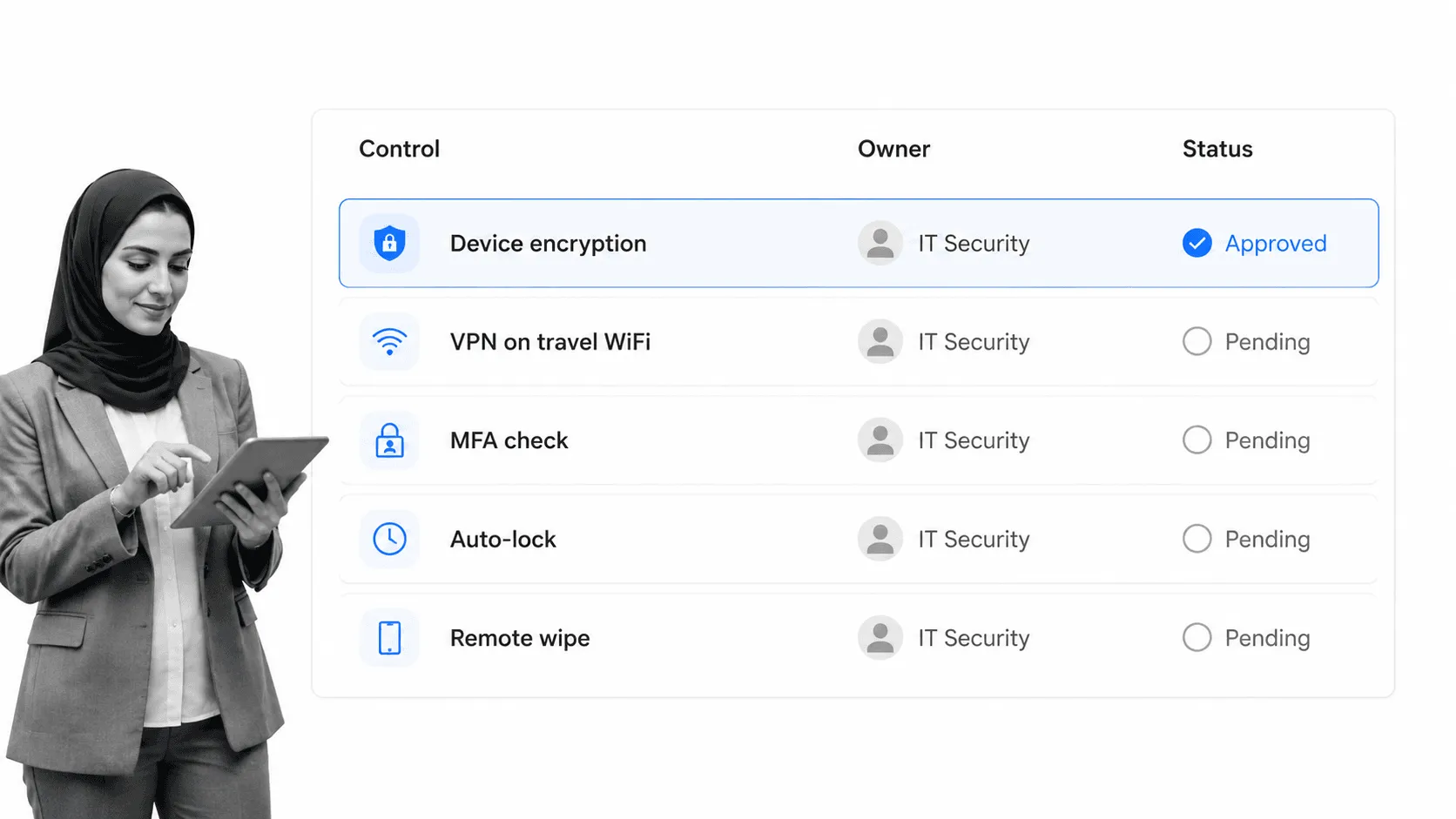
Perhaps the most interesting and impactful part of Basecamp’s employee handbook came right at the end: a section on security whilst traveling.
The section advises employees on visas, security, and, most interestingly, data protection. The data protection part boils down to one thing: don’t travel with company data.
When traveling, Basecamp requires you to wipe company data off of your devices. That means deleting the Basecamp app from your phone, temporarily disconnecting your password manager, and hiding Basecamp source code away in an encrypted archive.
Not only does this protect company data and innovations from being stolen, it also helps employees protect themselves.
Create policies fairly and collaboratively, with the help of the whole company
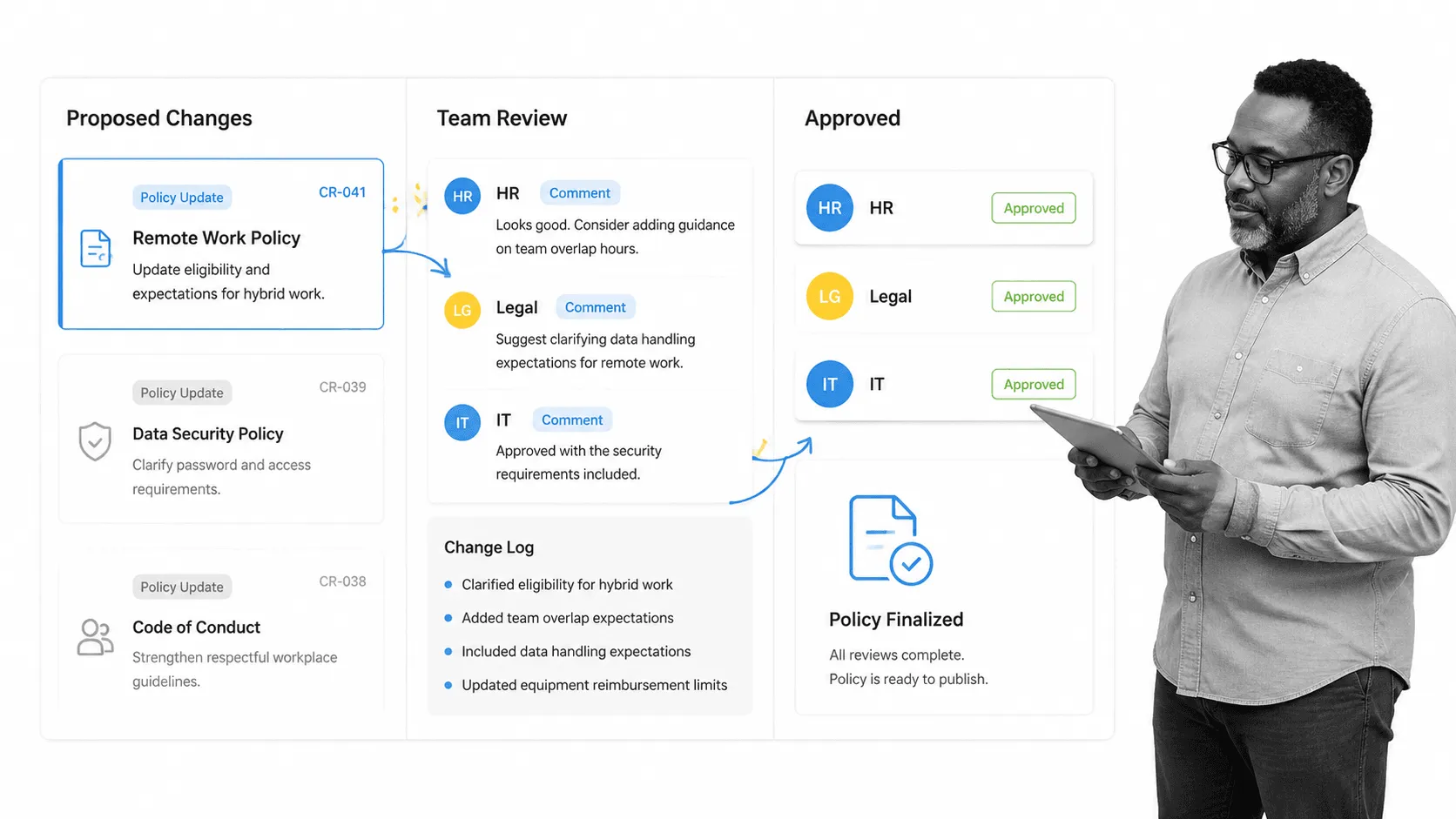
When just one person creates company policies, your company moves towards being more of a dictatorship than a democracy. It’s friendlier, and often faster, to make policies collaboratively, especially when policies include specialist knowledge from department heads. Basecamp’s handbook has contributors from programming, design, support, operations, and other parts of the company.
The handbook also shows how creating and perfecting policies is a continuous iterative process. A public repository makes revision history visible, and each edit can be accompanied by a quick one-line summary explaining what’s been changed. Even if your company doesn’t publish its handbook publicly, the same principle applies internally: policy changes should have owners, review steps, and a clear record of what changed.
Final points on Basecamp and company policy
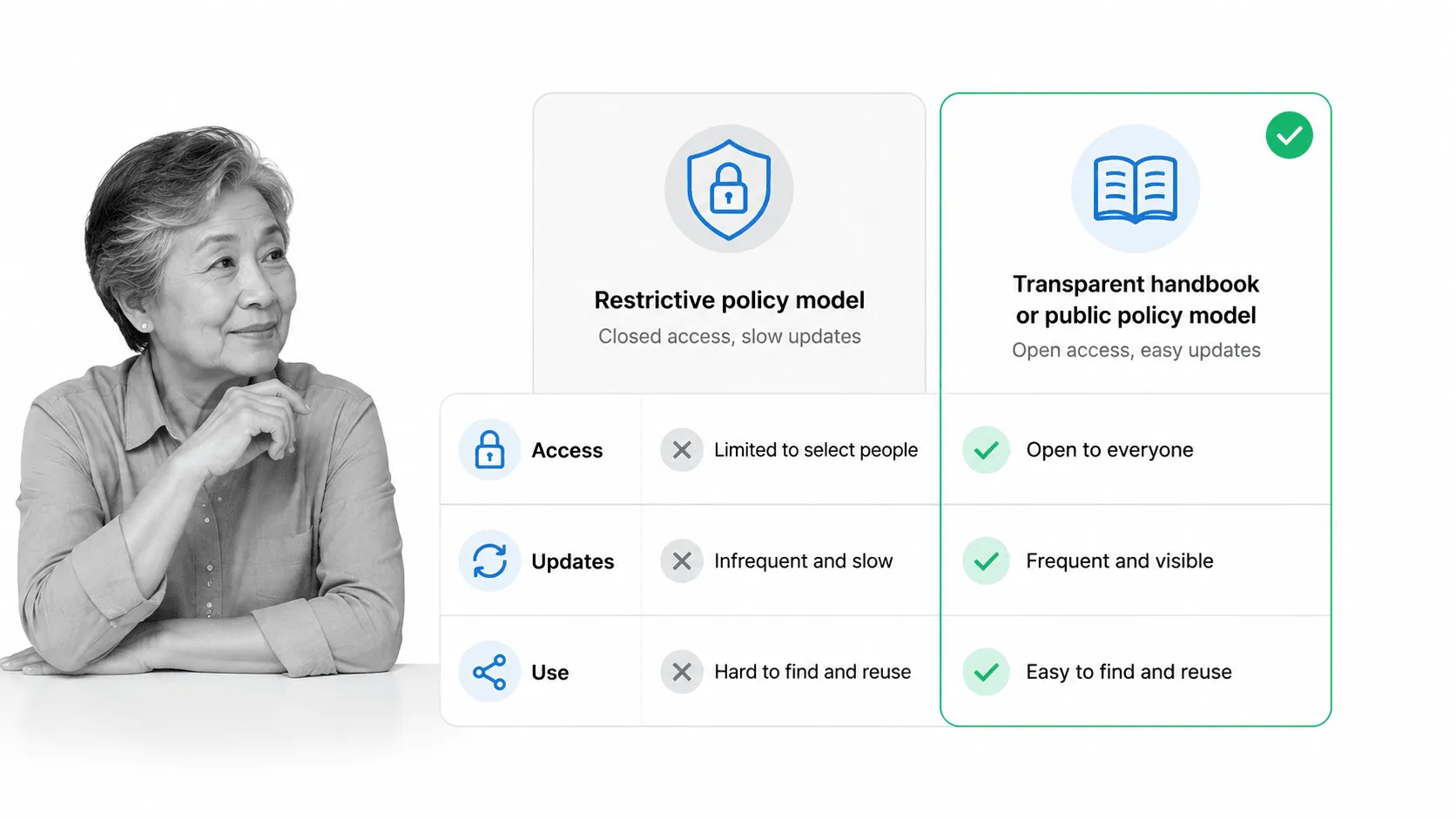
The thing that’s most interesting about Basecamp’s approach to company policy is that it’s a refreshing contrast to the usual idea of what ‘policy’ is. It’s not restrictive, overblown or too pushy. It’s mostly a set of guidelines and helpful checklists, transparently hosted for the public to read, and for other companies to learn from, because Basecamp aren’t ashamed of their internal workings.
Would you be happy with prospective employees knowing what your company policies are? Would you be happy with showing them to the outside world at large?
Whether or not policy should be loose and public, and whether that’s even practical, is an interesting discussion. What matters most is that the policy is clear, usable, and connected to the work people actually do. Process Street gives teams one place to manage policy documents, run the operational processes those policies require, and use built-in AI to help keep recurring compliance work moving with approvals, assignments, evidence, and audit-ready history.
The post 7 Insightful Company Policy Tips from Basecamp’s Employee Handbook first appeared on Process Street | Compliance Operations Platform.