











4 Actionable Steps to Increase Your Business Agility
Blog: Blog | Process Street | Compliance Operations Platform

This is a guest post from Jessica Thiefels. Jessica specializes in link building, social media strategy, and content strategy. You can find her at Jessica Thiefels Consulting or @JThiefels.
Business agility is the ability to respond quickly to market, customer, and operational change without losing momentum or control. It is not just speed. It is the discipline of improving your current methods, adapting your processes, and keeping your team aligned while conditions shift.
That matters for small businesses because change hits every part of the operation at once: talent, communication, customer relationships, leadership, and the systems that hold work together. The companies that stay agile are not the ones that chase every new tool. They are the ones that can make a clear decision, route work to the right person, learn from what happened, and improve the workflow before the next cycle begins.
Use these four actionable steps to increase business agility without turning your company into a constant experiment.
1. Build a cross-functional team
If you want a productive culture, hire and organize around the way work actually moves. Business agility depends on people who can work across disciplines, not only inside narrow job descriptions.
That does not mean every employee needs to do every job. It means the team needs enough shared context that marketing can work with product, operations can work with customer success, and managers can remove blockers before they become handoff failures.
Jeff Gothelf made this point in Harvard Business Review when he argued that agile organizations should look for nonconformists, generalists, and people with entrepreneurial range. This is the practical value of a synergized team: people understand more than one part of the system, so they can collaborate across departments without waiting for every handoff to be translated by leadership.
Look for soft skills that translate across changing work: creativity, collaboration, adaptability, persuasion, and time management. Those traits help employees connect ideas, fill gaps, and keep moving when the plan changes.
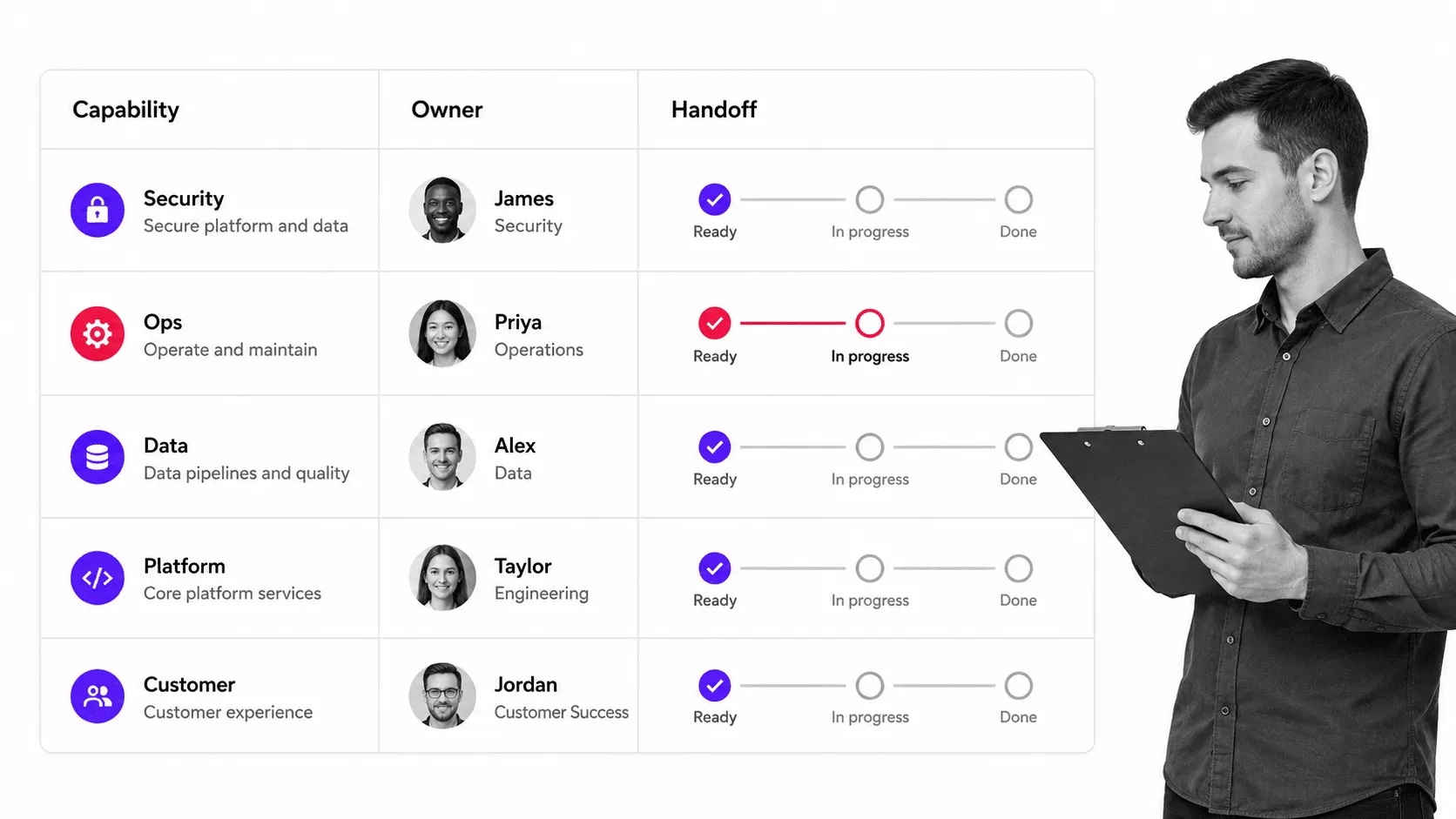
For a small business, the practical move is simple: stop designing every role as a silo. Pair roles around customer outcomes, document the handoffs, and make it clear who owns each step. When the team sees the whole workflow, it can adjust faster without waiting for a manager to translate every dependency.
2. Streamline communication and handoffs with technology
Collaboration is where business agility usually breaks. Most teams do not fail because nobody talked. They fail because requests, decisions, and follow-ups disappear across email, chat, meetings, and project tools.
Real-time chat can help, especially when teams are remote or hybrid, but chat alone does not create an agile business. Fast messages still need clear ownership. A question needs to become a task. A decision needs to become a change in the workflow. A customer issue needs to reach the right owner with enough context to act.
The goal is not to add more communication channels. The goal is to turn communication into routed work. That means using technology to capture requests, assign owners, set due dates, escalate blockers, and keep a record of what happened.
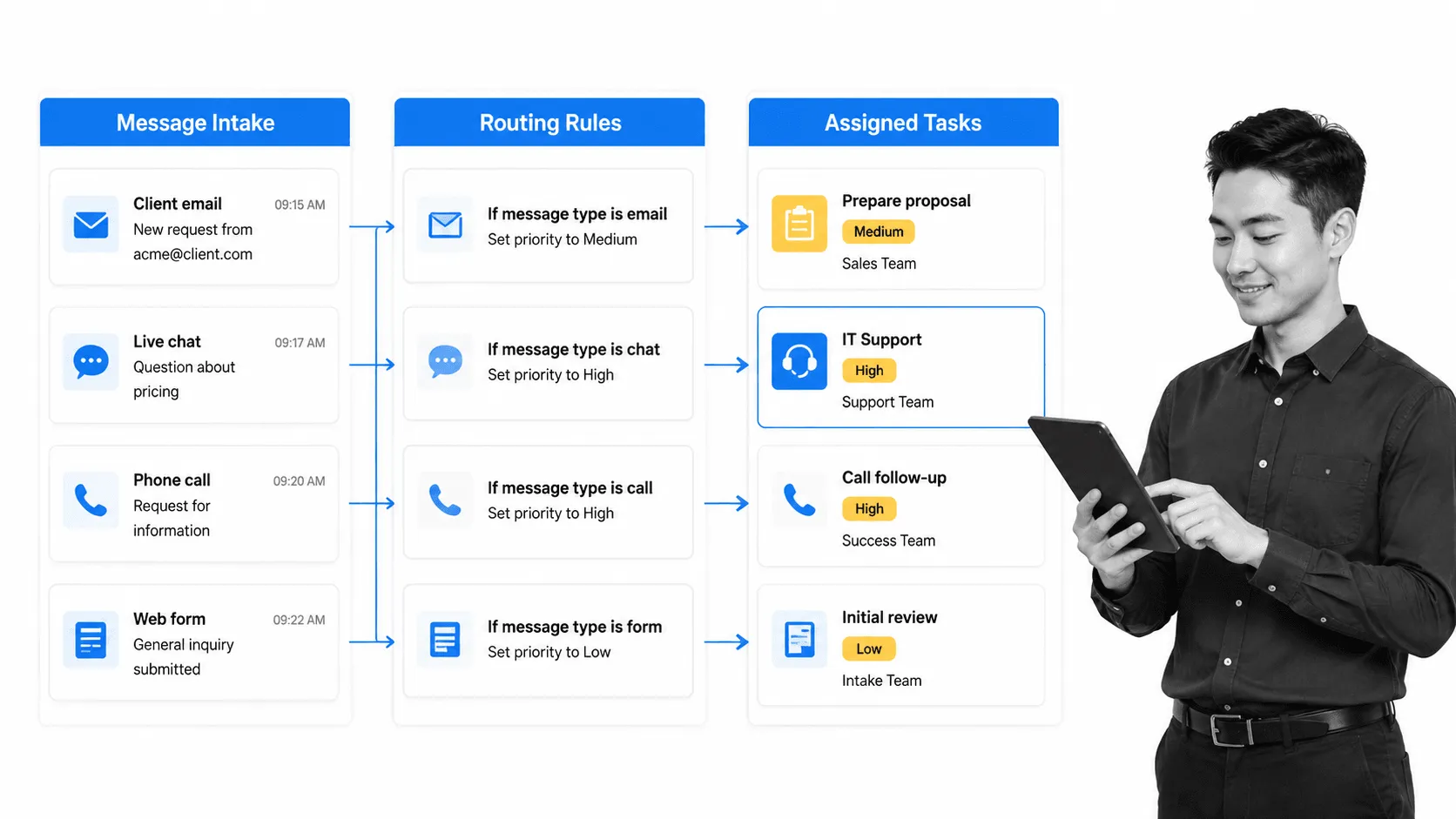
This is where workflow habits matter more than tool choice. If a team discusses the same decision in three places, the process is not agile. If one intake form routes the request, assigns the owner, and creates proof of completion, the team can move quickly without losing accountability.
For a small business, start with the handoffs that create the most delay: new customer requests, internal approvals, onboarding steps, finance reviews, or support escalations. Document the trigger, owner, expected response, and escalation path. Then automate the repeatable pieces.
3. Give employees room to act
Take a hard look at the roles and decision paths inside the company. Strong leadership can create stability, but strict command-and-control management often slows down the people closest to the work.
Steve Denning, author of The Age of Agile, has argued that command-and-control management can drain engagement because people feel they are executing instructions rather than improving outcomes. Agile teams need more room than that.
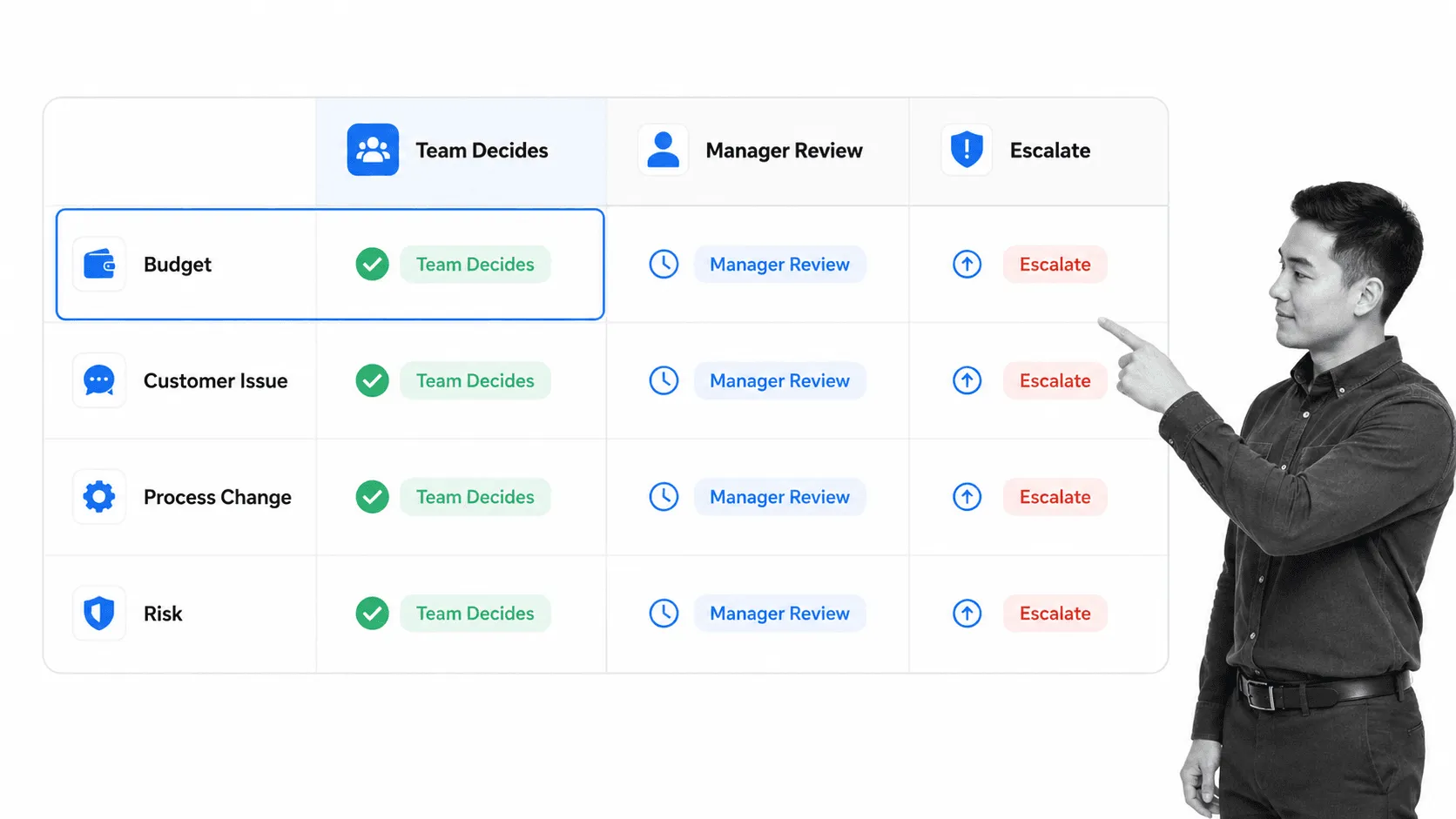
Employee decision rights should be explicit. Which decisions can a frontline team make immediately? Which ones need manager review? Which ones require escalation because they carry financial, legal, security, or customer risk?
The 3M Post-it story is still a useful example. Arthur Fry saw a practical use for a reusable adhesive that had not found a market. The idea was almost dismissed, but it became one of 3M’s most recognizable products. The lesson is not that every accident becomes a product. The lesson is that useful ideas often come from people close enough to the work to see what leadership misses.
To make that repeatable, create the conditions for informed action:
- Encourage calculated failure. A company that is growing will test ideas that do not work. Make the learning visible and improve the process.
- Welcome opinions and ideas. Build psychological safety so employees can surface risks, opportunities, and process problems early. Amy Edmondson’s work on psychological safety is still one of the strongest references here.
- Trust the people you hired. Give employees the context, standards, and guardrails they need to act without waiting for permission on every small decision.
4. Use a simple agility framework
Business agility can become vague if you do not define where agility is supposed to show up. A simple framework keeps the idea operational.
Dr. Tim Baker’s seven dimensions of agile performance are a useful way to keep business agility practical. The seven-part structure works as a checklist for small-business agility:
- Innovation: Can the company respond to evolving customer needs with better products, services, or delivery methods?
- Processing: Can the company improve day-to-day operations, onboarding, manufacturing, service delivery, and expansion workflows?
- Recovery: Can the company respond quickly when a customer issue, service failure, or internal mistake happens?
- Continuous improvement: Can the company improve an existing product, service, or process based on real feedback?
- Customer responsiveness: Can the company answer questions, resolve issues, and adapt to customer needs without slow internal routing?
- Problem solving: Can employees identify recurring workplace problems and fix the process rather than only fixing the symptom?
- Changing direction: Can the company stop using a method or procedure once it becomes ineffective?
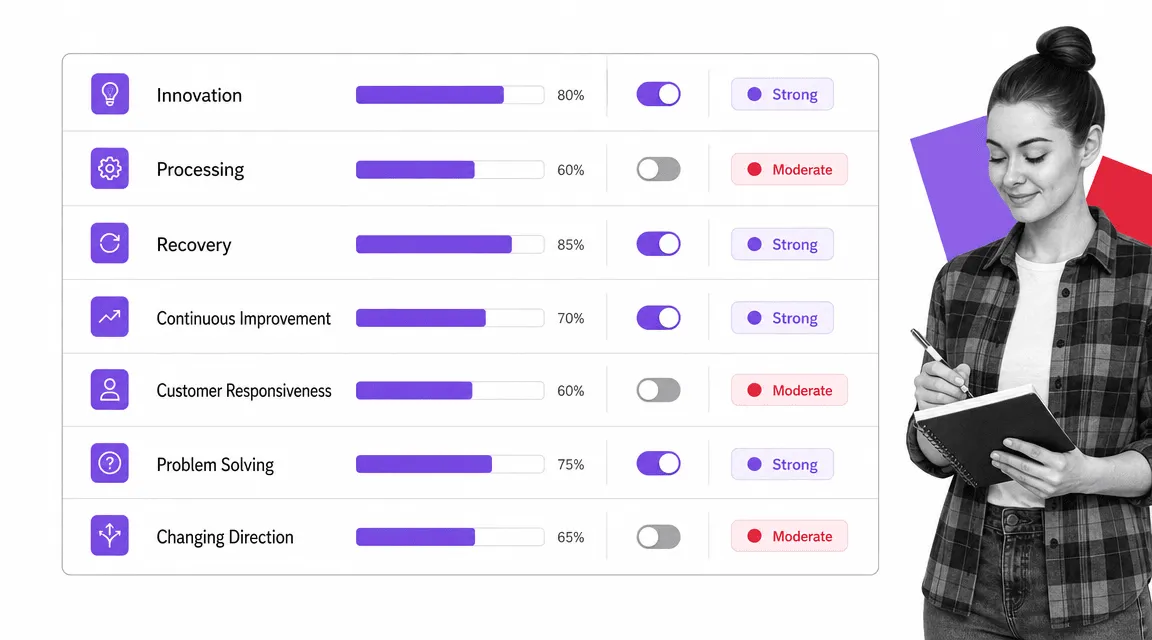
You do not need a heavy transformation program to use this. Review one dimension at a time. Pick the weakest one. Choose a workflow that proves whether the team can improve it. Then turn that workflow into something visible, assigned, measured, and repeatable.
Business agility operating checklist
Use the framework above as an active operating checklist. Business agility refers to qualities that allow organizations to respond rapidly to changes in the internal and external environment without losing momentum or vision. In practice, that means your team is able to accommodate diverse customer demands, make critical shifts when a method or procedure has become ineffective, and stay competitive without creating chaos behind the scenes.
For talent acquisition, retention, and operations, look for creativity, persuasion, collaboration, adaptability, time management, and curiosity. Choose staff who are not confined to one specific area of expertise. These candidates can connect quickly with different disciplines, work naturally with a developer, marketer, operator, or customer success lead, and help teamwork develop across departments.
For communication, do not rely on chat software alone. Chat groups can connect in-house and remote employees, but the outcome only improves when collaboration stands at the core of healthy team dynamics. The useful question is whether team effort produces better outcomes than team members working separately. If a message is active work, it needs a centralized view, an assigned owner, and a follow-up path.
For leadership, avoid control directives that keep every decision at the top. Have trust in the people you hired. Welcome opinions and ideas. Encourage failure when the risk is calculated. Keep an open forum for ideas, whether they come in a meeting, brainstorming session, or from an employee who comes knocking with a process improvement. Sometimes employees are the ones with the creative solutions that crack the code.
For process design, connect near-term benefits to long-term benefits. Near-term benefits include responsible individuals being notified of new tasks, work being consistently routed appropriately throughout the organization, redundant tasks being identified and automated, uncompleted tasks being followed up on, and managers seeing the big picture of activity across their team. Long-term benefits include risk mitigation, effective resource allocation, process flexibility, accountability, transparency, internal auditing, and real-time performance metrics.
For continuous improvement, ask whether the process creates an actionable workflow. A digital checklist should do more than document a task. It should create, execute, and optimize the workflow so work is completed the way it is intended to be, each and every time. That is how a team minimizes human error, increases accountability, and gives employees the tools and information necessary to complete their work effectively.
Keep the same checklist close to customer relations and infrastructure. Ask whether your business can stay ahead of your competition, grow and thrive in the face of change, assist customers with needs or concerns in a streamlined fashion, and continually improve a product or service that already exists. If the answer is no, the issue is usually not a lack of effort. It is that the system does not yet make the agile way of doing business visible, routed, and measurable.
5. Turn processes into executable workflows
Business process management software used to be described mainly as documentation and workflow tracking. That is too narrow for modern business agility. The real value is turning knowledge into execution: tasks assigned to owners, approvals routed automatically, exceptions escalated, and evidence captured as work happens.
That is why workflow software supports both near-term and long-term agility.
Near-term, it helps teams:
- See current and upcoming assignments in one place.
- Route tasks to the right owner automatically.
- Identify redundant work that can be removed or automated.
- Follow up on incomplete work before it becomes a blocker.
- Give managers a clear view of workload, accountability, and progress.
Long-term, it helps the business build:
- Lower operational risk and fewer missed steps.
- Better resource allocation.
- Scalable processes that do not depend on tribal knowledge.
- Flexible workflows that can change as the business changes.
- A culture of accountability, transparency, and continuous improvement.
- Audit-ready records that show how work was completed.
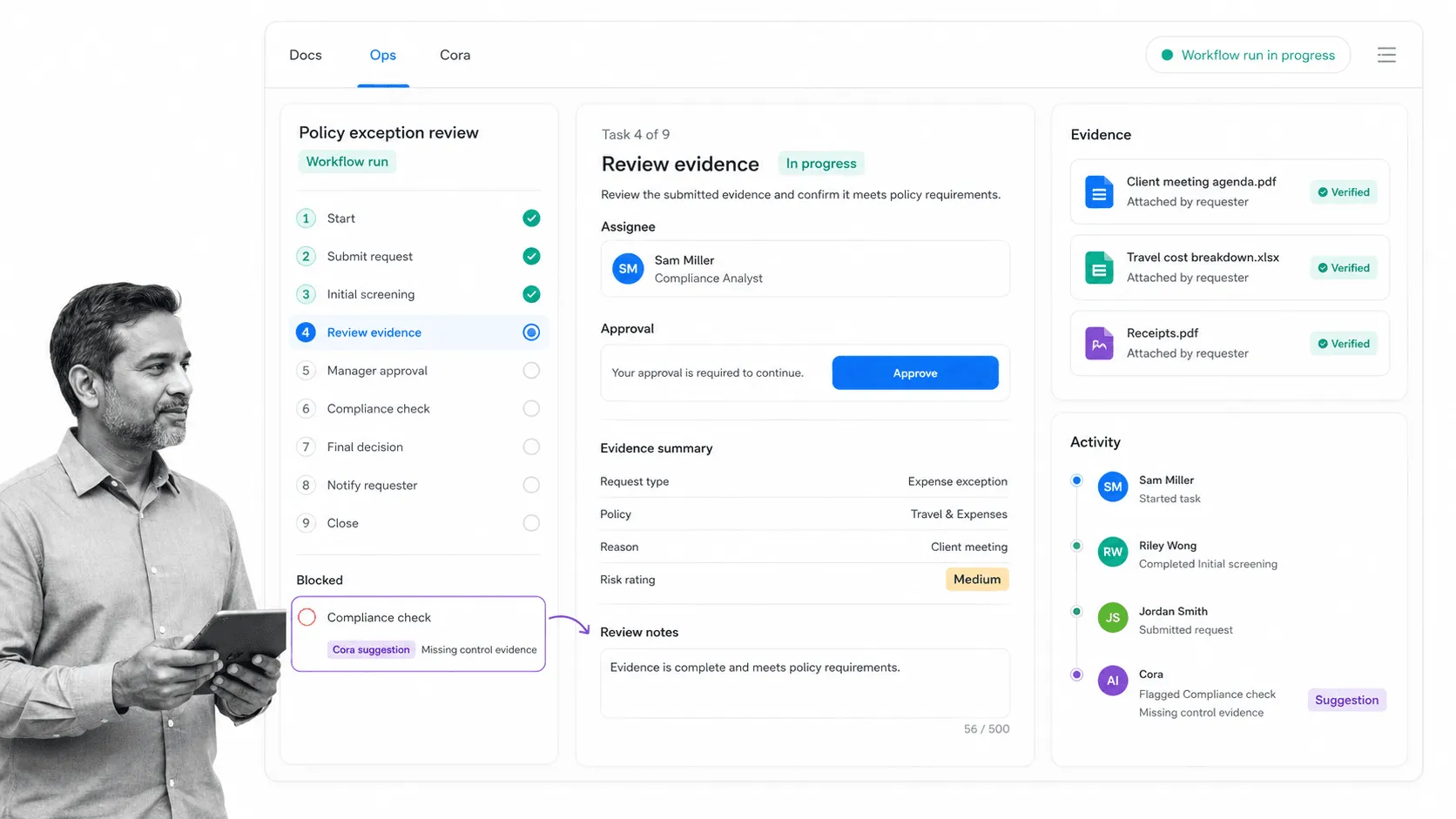
Process Street is a Compliance Operations Platform that brings together Docs, Ops, and Cora. Docs gives teams a governed place to document policies and procedures. Ops turns those procedures into executable workflows. Cora monitors work, flags risk, and helps teams improve the process before the same issue repeats.
If you are evaluating the broader category, this guide to a modern process platform explains how process documentation, workflow execution, and operational control fit together.
For business agility, the point is simple: the process should not live in one document, the task in another app, the approval in a chat thread, and the proof in someone’s inbox. Agile businesses connect those pieces so work can move quickly and still be controlled.
The bottom line
If the objective for your small business is to grow, business agility is not optional. It is how you stay useful when customer needs, tools, competitors, and internal constraints change.
Build a cross-functional team. Turn communication into routed work. Give employees room to act inside clear guardrails. Use a simple framework to find weak spots. Then convert the most important processes into executable workflows that can be assigned, automated, audited, and improved.
That combination gives your business the practical version of agility: faster decisions, fewer dropped handoffs, better customer response, and processes that improve as the company grows.
The post 4 Actionable Steps to Increase Your Business Agility first appeared on Process Street | Compliance Operations Platform.